

Or call us at for a free consultation!
Bowling Green: (270) 714-9964
Lexington: (859) 762-2664
Winchester: (859) 762-2664
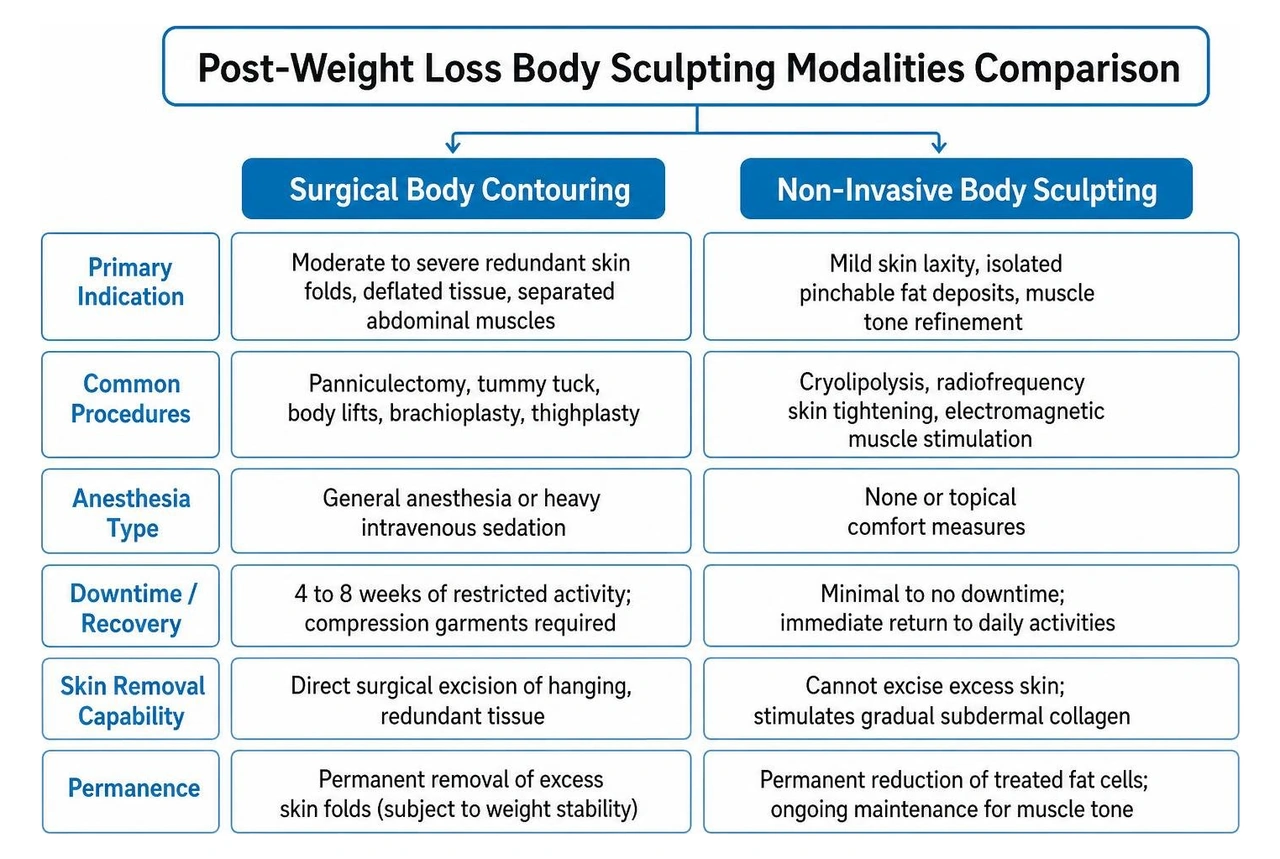
Body contouring after weight loss falls into two distinct clinical categories: invasive surgical reconstruction and non-invasive aesthetic modalities. Surgical options, such as tummy tucks, panniculectomies, and body lifts, directly excise moderate-to-severe redundant skin folds and repair underlying supportive tissues. Non-invasive modalities, such as cryolipolysis and radiofrequency treatments, target isolated fat deposits and mild skin laxity without surgery or downtime. Clinical insights from the Yale Medicine clinical review on body contouring after weight loss highlight that surgical excision remains the primary medical standard when large folds of redundant skin cause mobility issues or chronic discomfort.
Significant weight reduction transforms systemic health, but it often alters the underlying structural matrix of the skin. When subcutaneous fat expands during weight gain, it stretches overlying skin and damages elastin fibers, leaving tissue that cannot fully retract once weight is lost. Addressing these physical changes is an essential part of post-weight loss restoration.
| Feature | Surgical Body Contouring | Non-Invasive Body Sculpting |
|---|---|---|
| Primary Indication | Moderate to severe redundant skin folds, deflated tissue, separated abdominal muscles | Mild skin laxity, isolated pinchable fat deposits, muscle tone refinement |
| Common Procedures | Panniculectomy, tummy tuck, body lifts, brachioplasty, thighplasty | Cryolipolysis, radiofrequency skin tightening, electromagnetic muscle stimulation |
| Anesthesia Type | General anesthesia or heavy intravenous sedation | None or topical comfort measures |
| Downtime / Recovery | 4 to 8 weeks of restricted activity; compression garments required | Minimal to no downtime; immediate return to daily activities |
| Skin Removal Capability | Direct surgical excision of hanging, redundant tissue | Cannot excise excess skin; stimulates gradual subdermal collagen |
| Permanence | Permanent removal of excess skin folds (subject to weight stability) | Permanent reduction of treated fat cells; ongoing maintenance for muscle tone |
For individuals who have lost 100 pounds or more, surgical intervention is often necessary to eliminate hanging skin. When massive amounts of tissue stretch for years, exercise and dietary adjustments cannot restore skin retraction.
Surgical body contouring encompasses several targeted procedures designed to excise excess tissue and reinforce the deeper supportive fascial layers:
These surgical procedures are performed under general anesthesia in accredited surgical centers. They utilize strategic incision placement along natural anatomical creases to minimize visible scarring, and temporary surgical drains are often placed to prevent post-operative fluid collection (seromas).
Non-surgical technologies offer an effective path for individuals who have mild-to-moderate skin laxity or stubborn fat deposits after reaching their goal weight. These options do not involve incisions, anesthesia, or prolonged surgical downtime.
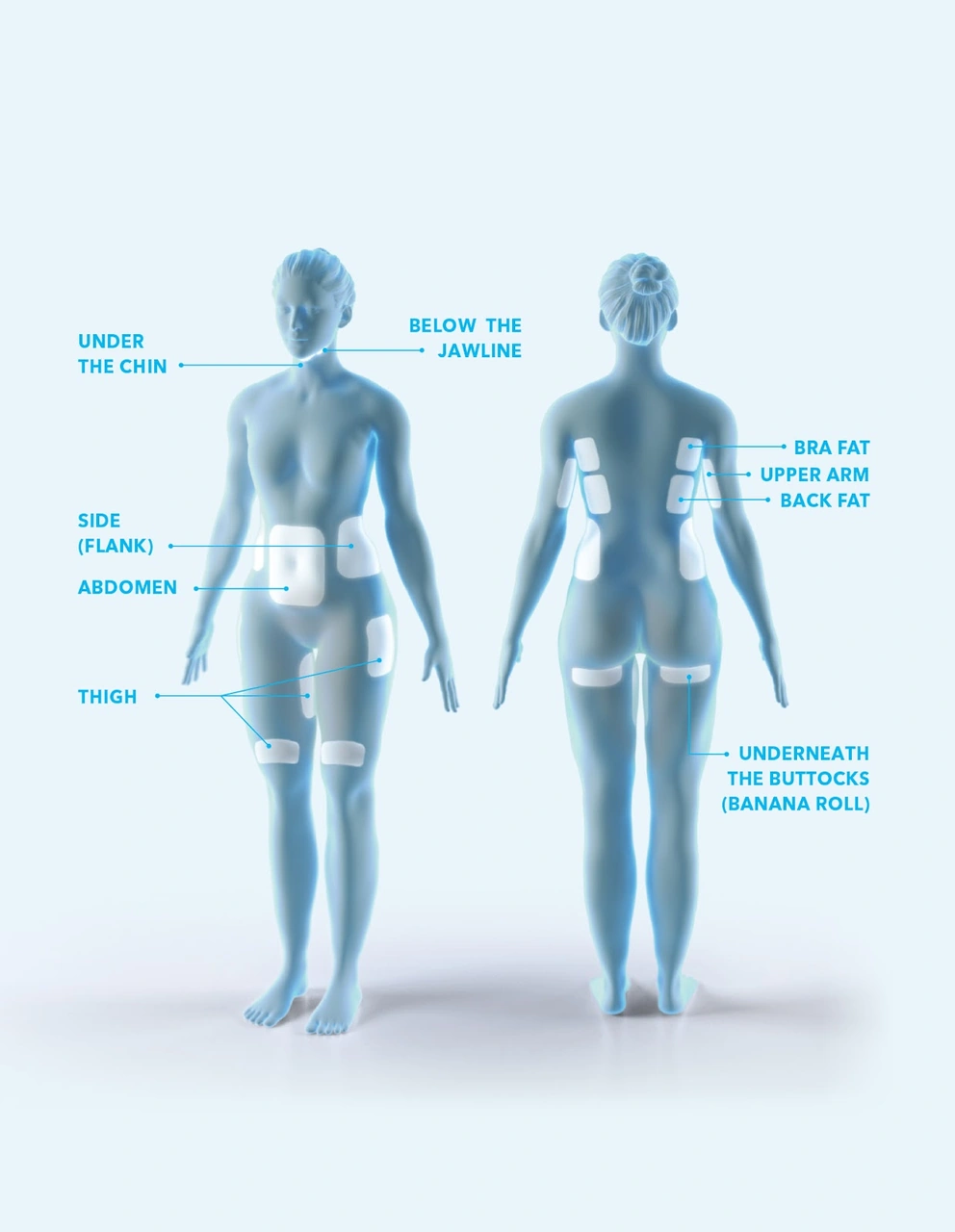
Targeted fat freezing with CoolSculpting uses controlled cooling (cryolipolysis) to eliminate stubborn fat cells in areas like the abdomen, flanks, submental area, bra fat, and thighs. Once crystallized, these fat cells are processed and cleared naturally through the lymphatic system over the following weeks. At our Bowling Green location, CoolSculpting results are backed in writing per practice policy, offering peace of mind as you refine your physique.
To address skin laxity, energy-based systems deliver controlled thermal energy into the deeper dermis. Treatments like radiofrequency skin tightening stimulate collagen and elastin synthesis, helping firm loose areas on the abdomen, neck, and extremities. For those exploring what treatments help with loose skin after weight loss, combining radiofrequency energy with microneedling can improve both skin texture and dermal thickness.
In addition to fat reduction and skin tightening, electromagnetic treatments such as CoolTone muscle toning induce supramaximal muscle contractions in the abdomen, buttocks, and thighs. This treatment strengthens core musculature and improves definition, which helps optimize body composition after weight reduction.
Deciding to pursue post-weight loss body shaping requires careful clinical evaluation. Whether an individual chooses surgical intervention, non-invasive treatments, or a combination of both, medical stability and physical readiness are essential prerequisites for safe, lasting outcomes.
An ideal candidate for body contouring has achieved significant weight loss and transitioned into a stable maintenance phase. Candidacy evaluations assess several key factors:
Timing is critical when planning body contouring procedures. Undergoing treatments or surgery too early, while weight is still fluctuating, can compromise long-term aesthetic outcomes.
For bariatric surgery patients, weight loss typically reaches a plateau between 12 and 24 months post-surgery. Plastic surgeons generally require patients to maintain a stable weight for at least three to six consecutive months before scheduling major excisional operations. Patients managing weight with GLP-1 medications should also reach a steady maintenance dose and stable body weight before pursuing elective contouring.
Premature body contouring carries distinct clinical risks. If a patient loses substantial weight after surgery or body sculpting, the remaining skin can stretch again and develop new laxity. Conversely, regaining weight after contouring stretches the newly tightened skin, which can compromise results and widen surgical scars. Reaching metabolic and weight stability ensures the best possible outcome.
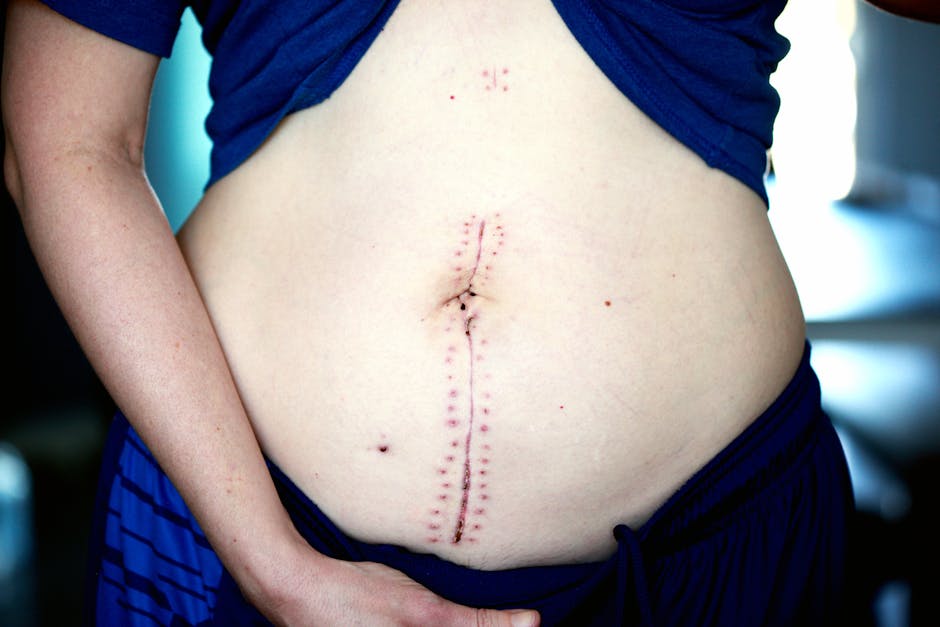
Every body contouring procedure requires an appropriate recovery plan. Surgical approaches involve surgical wound healing and physical activity restrictions, while non-surgical treatments allow patients to return to their normal schedules almost immediately.
For surgical cases, safety protocols and recovery guidelines from the Johns Hopkins Medicine guide on post-weight loss body contouring emphasize the importance of deep vein thrombosis (DVT) prophylaxis, diligent wound care, and structured recovery phases.
Recovery from major surgical body lifting typically requires a two-month healing window for complete tissue recovery:
Potential surgical complications include seromas (fluid pockets), hematomas, wound separation, infection, deep vein thrombosis, and persistent swelling. Strict adherence to post-operative instructions significantly lowers these risks.
In contrast, recovery from non-invasive body contouring treatments is straightforward. Following cryolipolysis or radiofrequency therapy, patients may experience temporary redness, mild swelling, bruising, or local tenderness, but these side effects resolve within a few days without disrupting daily life.
Because massive weight loss affects multiple areas of the body, patients often need contouring across the abdomen, back, arms, breasts, and thighs. However, performing every procedure in a single operation can lead to extended anesthesia times, excessive blood loss, and challenging recoveries.
Plastic surgeons frequently recommend staging complex body contouring into two or three separate surgical sessions spaced several months apart:
Staging surgeries keeps operative times within safe limits (typically under six hours per session), protects blood supply to delicate skin flaps, and ensures a smoother, safer recovery.
Understanding the financial landscape of body contouring is essential when planning your care. Standard health insurance policies categorize most post-weight loss body contouring procedures as elective cosmetic surgeries, meaning they are typically paid out of pocket.
However, certain procedures may qualify for insurance coverage if they meet strict criteria for medical necessity:
Non-invasive body contouring treatments like CoolSculpting and radiofrequency skin tightening are elective aesthetic treatments and are not covered by insurance. Many medical spas and surgical practices offer flexible healthcare financing programs to help manage out-of-pocket costs.
Surgical skin excision permanently removes excess tissue folds, and non-invasive cryolipolysis permanently eliminates targeted fat cells. However, maintaining these results depends on weight stability. Gaining weight will expand the remaining fat cells and stretch the skin, while additional weight loss can lead to new skin laxity. To learn more about treatment longevity and lifestyle maintenance, review our guide on how long body contouring lasts.
Non-invasive treatments cannot replace surgical excision for patients with large, hanging folds of redundant skin. Non-surgical skin tightening devices stimulate collagen to address mild-to-moderate skin laxity, but they cannot retract severe, deflated skin aprons. Non-invasive options are best suited for individuals near their goal weight who have localized fat pockets or mild skin laxity.
Insurance typically covers only functional panniculectomies when chronic medical complications, such as severe skin breakdown or recurrent infections, are thoroughly documented by a physician. Procedures focused on aesthetic improvements, including tummy tucks, arm lifts, breast lifts, and thigh lifts, are classified as cosmetic and are not covered by insurance.
Body contouring after weight loss is the rewarding final step in a dedicated health and wellness journey. Whether you need surgical excision to remove heavy, redundant skin folds or non-invasive body sculpting to address isolated fat deposits, choosing the right treatment plan depends on your unique anatomy, weight stability, and aesthetic goals.
Platinum Sculpt is a luxury med spa in Bowling Green, Lexington, and Winchester, KY, specializing in body contouring, injectables, skin tightening and laser resurfacing, facials, hair restoration, and medical weight loss and wellness. We offer non-invasive body contouring with CoolSculpting, skin tightening, and personalized wellness plans to help you refine your shape safely. TotalSkin Solution is exclusive to our Lexington and Bowling Green clinics, HydraFacial is offered exclusively in Bowling Green, and DiamondGlow is available in Lexington. Please note that our Winchester location focuses on injectables, weight loss, laser resurfacing, hair restoration, IV infusions, GeniusRF, and PDGF under-eye treatments.
To learn how our comprehensive medical wellness and weight management programs and non-invasive contouring treatments can support your aesthetic goals, schedule your consultation today.
.svg)

