

Or call us at for a free consultation!
Bowling Green: (270) 714-9964
Lexington: (859) 762-2664
Winchester: (859) 762-2664

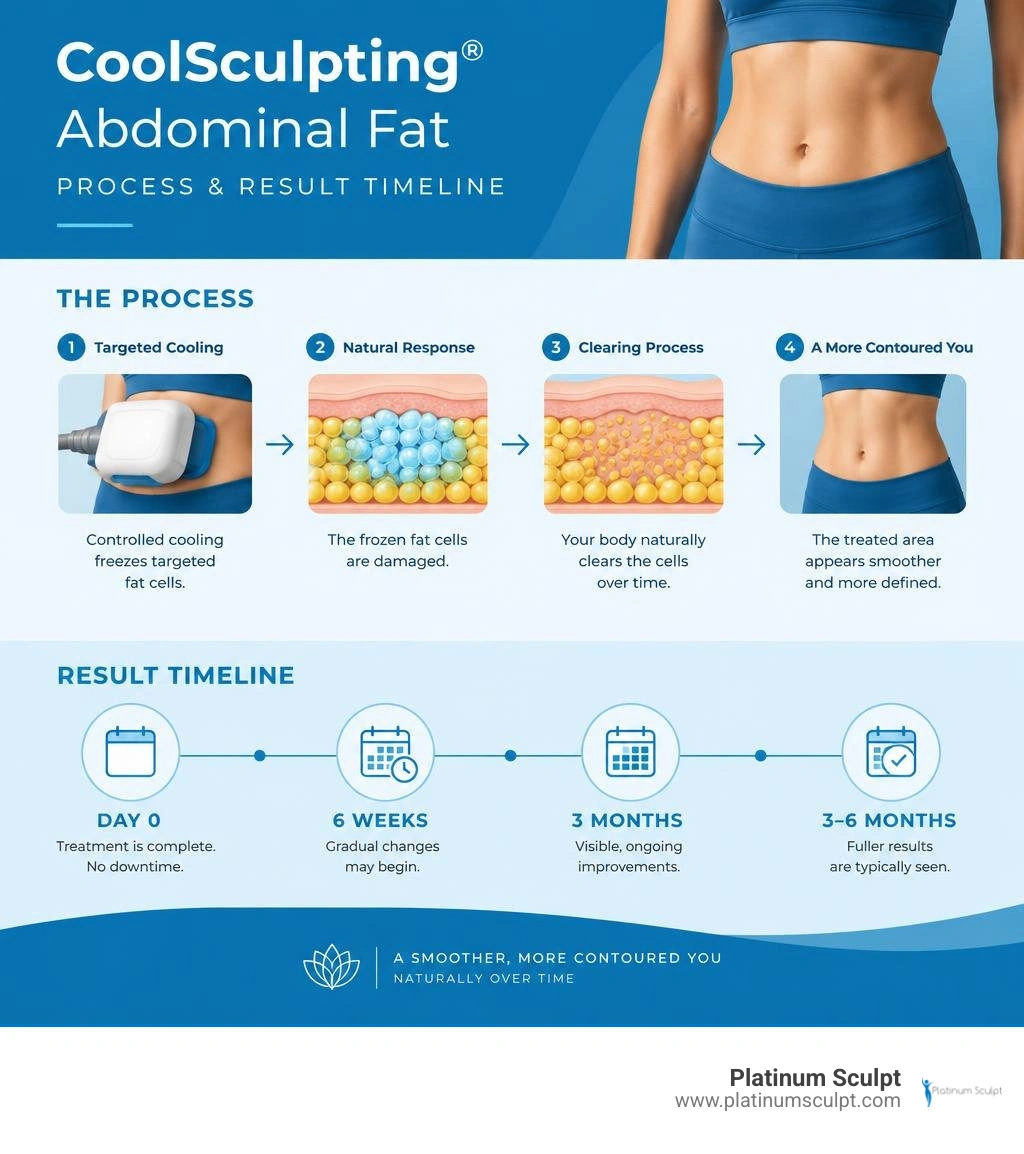
CoolSculpting abdominal fat treatment can reduce a small, pinchable layer of fat just beneath the skin without surgery or downtime. It is a body-contouring treatment, not a weight-loss plan, and it does not reliably treat the deeper visceral fat around internal organs. Most people see gradual changes starting around six weeks, with fuller results in three to six months.
A single treatment cycle may reduce the treated fat layer by about 20% to 25%, though results vary by anatomy, treatment plan, and weight stability. It tends to suit adults who are near a stable weight and want to address a localized abdominal area that has not changed as much as they would like with nutrition and exercise.
CoolSculpting uses controlled cooling, called cryolipolysis, to damage targeted fat cells. Your body then clears those cells over time. A consultation is the best way to confirm whether the abdominal area is suitable, review risks such as numbness, bruising, and the rare risk of paradoxical adipose hyperplasia, and discuss realistic results.
Learn more about coolsculpting abdominal fat:
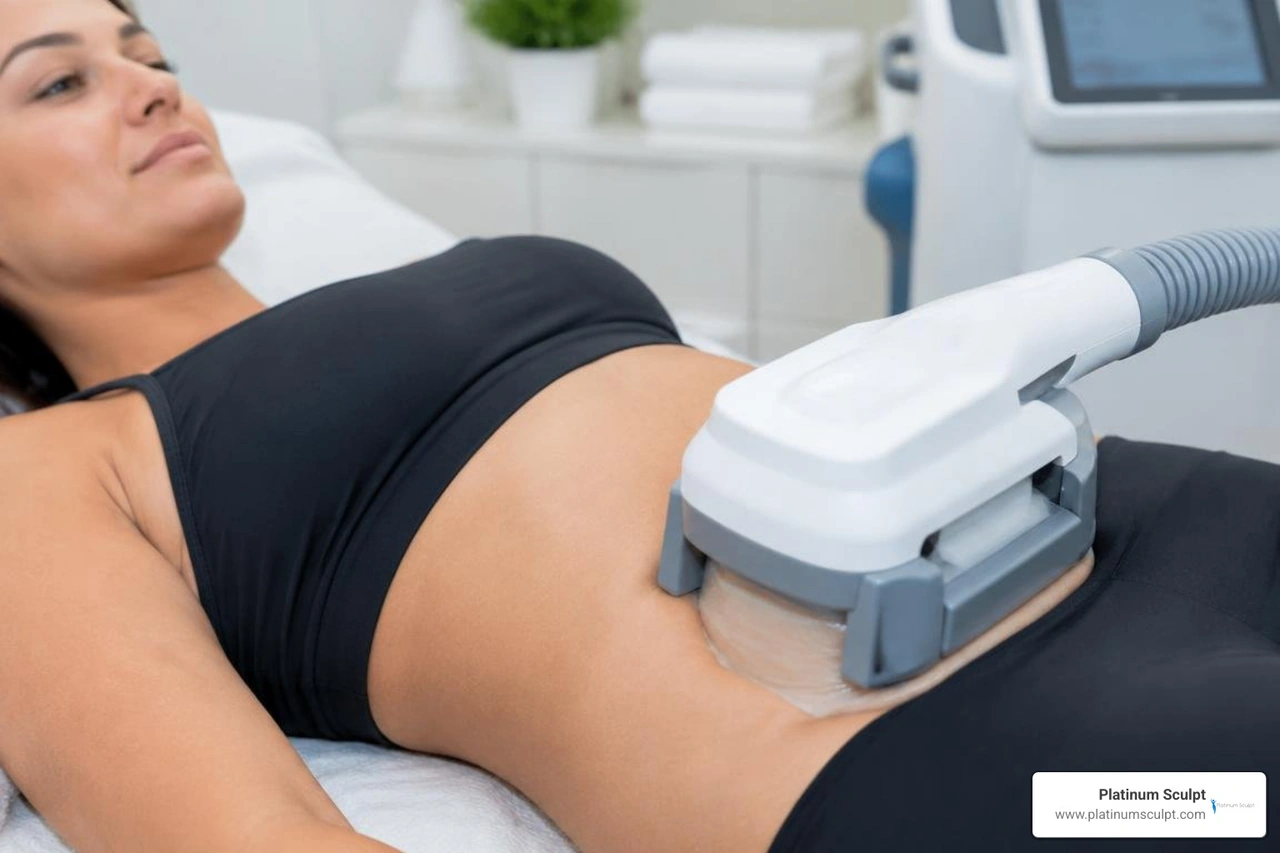
Cryolipolysis is the underlying scientific technology behind CoolSculpting. The concept originated from clinical observations of cold-induced tissue changes, historically referred to as popsicle panniculitis, where localized cold exposure caused targeted fat cell breakdown without damaging the overlying skin. Modern aesthetic devices harness this biological sensitivity by delivering precisely controlled cooling through specialized abdominal applicators.
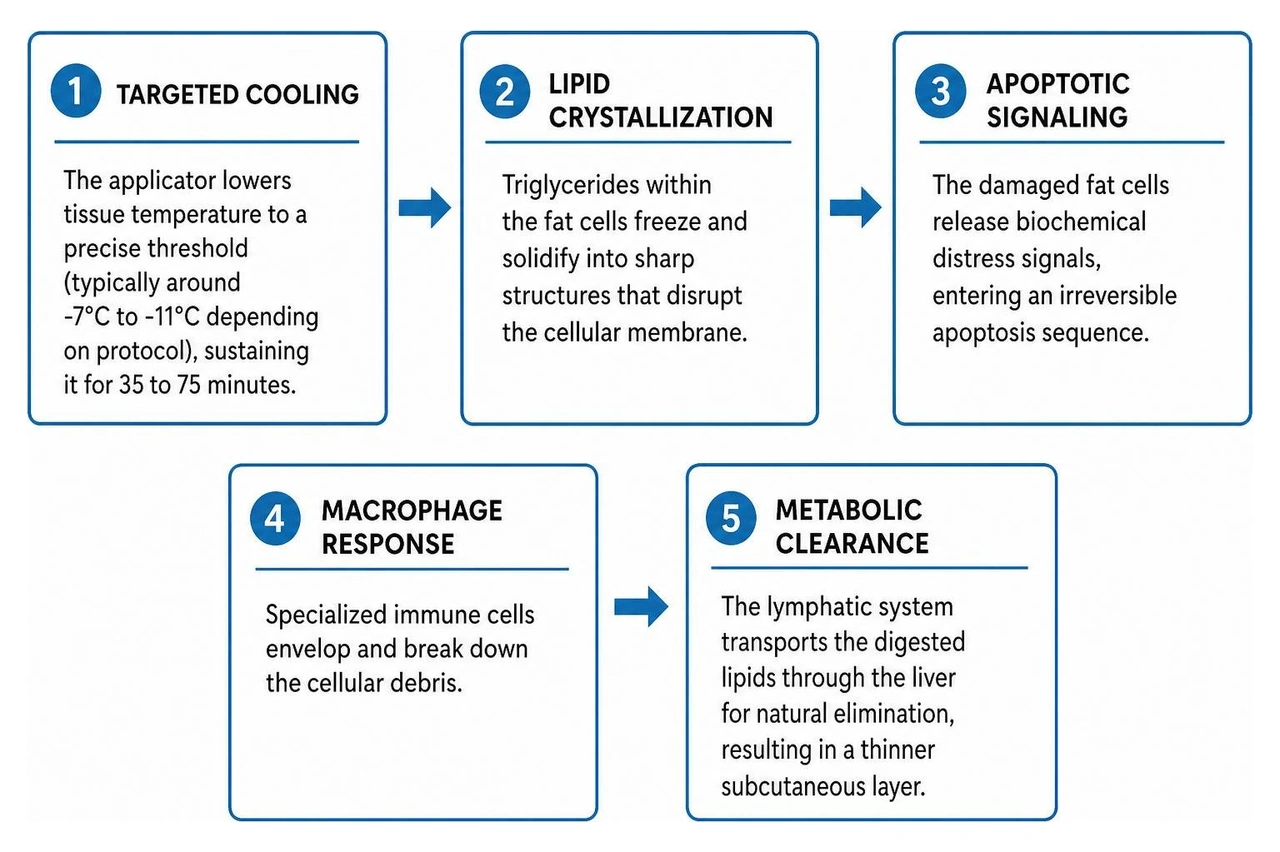
Fat cells, known as adipocytes, are naturally rich in saturated fatty acids, making them far more vulnerable to cold temperatures than neighboring tissues. During a treatment session, the cooling paddle draws tissue into a vacuum cup, safely cooling the area to temperatures that trigger lipid crystallization within the fat cells. This crystallization initiates adipocyte apoptosis, a form of programmed cellular death. Over the following weeks and months, the body's immune system deploys macrophages to digest and clear these dead cells through normal metabolic processes. Because nerve fibers, muscle tissue, blood vessels, and dermal layers have higher water content and lower freezing thresholds, they remain unharmed during the process.
The biological cascade that leads to non-surgical fat reduction follows a clear timeline:
Understanding the anatomical distribution of body fat is crucial when evaluating non-invasive body contouring. The human abdomen contains two distinct types of adipose tissue: subcutaneous adipose tissue (SAT) and visceral adipose tissue (VAT).
Subcutaneous fat sits directly beneath the dermis and above the abdominal muscle wall. This is the soft, pliable, "pinchable" tissue that creates localized bulges. Visceral fat, in contrast, lies deep within the peritoneal cavity beneath the firm abdominal wall muscles, surrounding major internal organs such as the stomach, liver, and intestines. Excess visceral fat creates a firm, protruding abdomen and carries significant cardiometabolic health risks.
| Characteristic | Subcutaneous Adipose Tissue (SAT) | Visceral Adipose Tissue (VAT) |
|---|---|---|
| Location | Directly beneath the skin, above muscles | Deep inside the peritoneal cavity around organs |
| Texture | Soft, movable, pinchable | Firm, hidden behind the abdominal wall |
| Health Risks | Primarily aesthetic concern | Linked to cardiovascular disease and insulin resistance |
| CoolSculpting Target | Primary clinical target for cryolipolysis | Not the primary intended target for standard applicators |
| Primary Reduction Method | Cryolipolysis and caloric deficit through nutrition and exercise | Aerobic exercise, dietary changes, medical weight loss |
Standard medical cryolipolysis is FDA-cleared specifically for subcutaneous fat reduction. However, clinical investigations have explored its broader physiological effects. Notably, a split-body clinical study published in PLOS One evaluated unilateral cryolipolysis on the abdomen using computed tomography (CT) scans. The researchers documented that after a single unilateral cryolipolysis session, the cross-sectional area of visceral adipose tissue on the treated side decreased significantly by 15.6% (a reduction of 6.8 cm²) over 12 weeks, compared to only a 3.6% reduction (1.2 cm²) on the untreated control side. While this provides fascinating insights into cold-induced tissue remodeling, CoolSculpting remains an aesthetic tool designed primarily for superficial, pinchable fat layers rather than an alternative to comprehensive metabolic weight management.
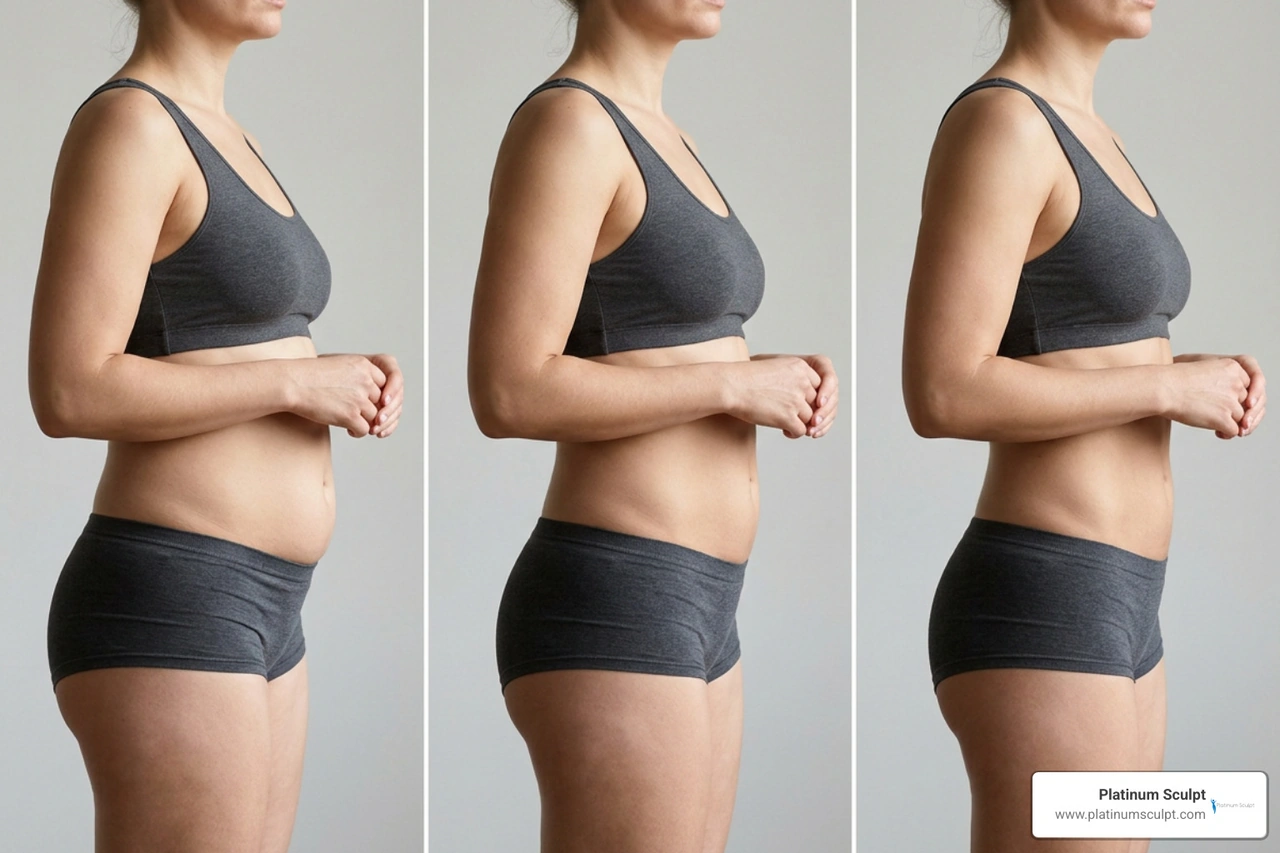
Evaluating clinical effectiveness requires measuring objective changes in fat layer thickness rather than total body weight. Cryolipolysis produces measurable, localized contouring changes without significantly shifting the reading on a bathroom scale.
Clinical literature consistently demonstrates that a single cycle of cryolipolysis removes roughly 20% to 25% of the adipocytes in the targeted area. On average across diverse clinical trials, patients experience an overall reduction of 10% to 25% in subcutaneous fat layer thickness after their initial treatment.
Because fat cells cleared by apoptosis do not regenerate in adults, this percentage reduction represents a permanent removal of those specific cells. When patients present with larger subcutaneous bulges, clinical practitioners frequently design multi-cycle treatment plans spaced several weeks apart to achieve compounded reductions across the upper and lower abdomen.
Fat clearance after cryolipolysis is an immunological and metabolic process that takes time to manifest visually:
Cryolipolysis maintains an established safety profile supported by more than a decade of clinical use since its initial FDA clearance in 2010. Because the treatment involves no incisions, anesthesia, or surgical recovery, most patients resume work and regular activities immediately following their appointment.
Determining candidacy involves evaluating physical tissue characteristics, body composition, and overall expectations:
Common side effects of abdominal cryolipolysis are transient and mild. Up to 10% of patients experience temporary bruising caused by the vacuum suction, which typically resolves within two weeks. Other standard post-treatment sensations include localized redness, swelling, firmness, tingling, and mild sensory numbness lasting two to four weeks.
A rare but significant adverse event is Paradoxical Adipose Hyperplasia (PAH). PAH occurs when the treated fat cells unexpectedly enlarge over months following the procedure rather than shrinking, forming a firm, painless mass that mirrors the shape of the applicator.
Current clinical data indicates that PAH occurs in less than 1% of cases. Research suggests it is more frequently documented in male patients, individuals of Hispanic descent, treatments involving large handpieces, and abdominal placements. PAH does not resolve on its own and requires further evaluation and treatment planning with a qualified provider. Selecting a qualified provider who uses authentic devices and proper applicator sizing minimizes procedural risks.
Achieving natural abdominal contouring requires tailoring the number of cooling cycles and applicator sizes to a patient's unique anatomy. A standard abdominal protocol might require two to four separate cycles across the upper and lower abdomen in a single visit.
A personalized CoolSculpting treatment plan generally ranges from $2,000 to $4,000, depending on the number of areas treated and total cycles needed. Because this is an elective cosmetic procedure, health insurance policies do not cover the cost.
When planning an abdominal contouring journey, several protocol considerations and supportive approaches help optimize outcomes:
Yes, cryolipolysis causes irreversible apoptosis in targeted adipocytes, and those destroyed cells are cleared permanently through the lymphatic system. However, the remaining fat cells in the untreated areas can expand if caloric intake exceeds expenditure. Long-term maintenance requires a stable weight and healthy lifestyle habits.
Most patients achieve their desired contour with one to two dedicated sessions per treated zone. Individuals with higher baseline body mass or larger subcutaneous fat layers may benefit from two or three rounds of treatments spaced two to three months apart to achieve comprehensive debulking.
Cryolipolysis is strictly classified as an elective cosmetic treatment designed for body shaping. Health insurance plans, Medicare, and Medicaid do not cover the costs of CoolSculpting. Med spas and aesthetic practices offer direct self-pay pricing and flexible third-party medical financing options to help manage treatment expenses.
Addressing stubborn abdominal fat requires a clear understanding of your anatomy, your health goals, and the technologies available to refine your shape. CoolSculpting offers an effective, non-surgical method to reduce localized subcutaneous bulges with zero surgical downtime, backed by strong clinical data and high patient satisfaction.
At Platinum Sculpt, we provide a luxury patient experience tailored to your unique contouring goals. We are Kentucky and Tennessee's first specialized CoolSculpting provider, offering expert assessments across our state-of-the-art facilities. When you receive CoolSculpting in Bowling Green, KY, your outcomes are backed by our written results guarantee per practice policy.
To discover what cryolipolysis can achieve for your midsection, schedule your complimentary consultation with our clinical team today. Learn more about our comprehensive CoolSculpting body contouring consultation options and take the first step toward your aesthetic goals.
.svg)

