

Or call us at for a free consultation!
Bowling Green: (270) 714-9964
Lexington: (859) 762-2664
Winchester: (859) 762-2664
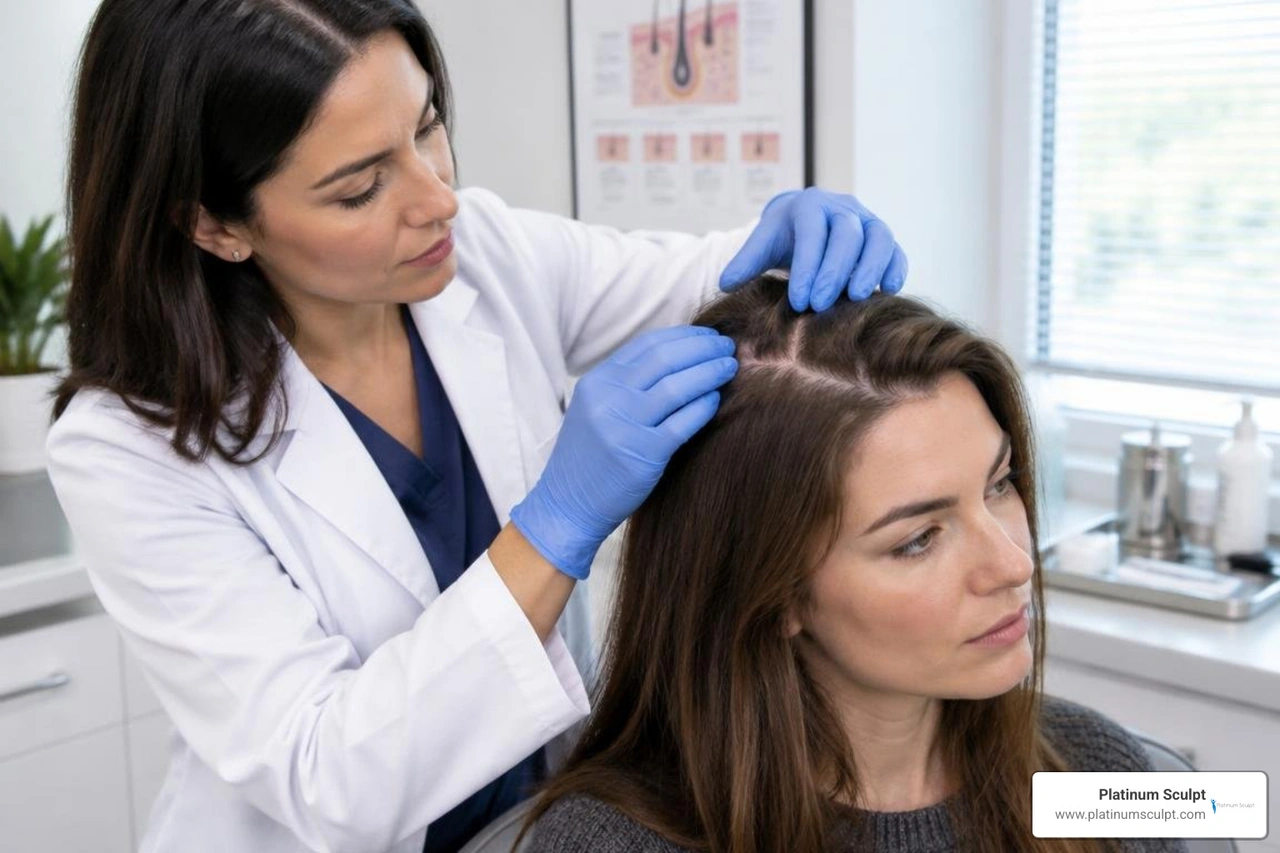
See a dermatologist for hair loss if you notice a widening part, bald patches, a receding hairline, or shedding that lasts more than three months. Seek an evaluation sooner if your scalp is painful, red, or inflamed. A dermatologist can examine your scalp, look for the cause, and explain which treatments may help.
Some shedding improves after a temporary trigger, such as illness or major stress. Other types of hair loss need early care to protect the follicles. If you are considering hair restoration, book a consultation to discuss your concerns and whether a dermatology evaluation should come first.
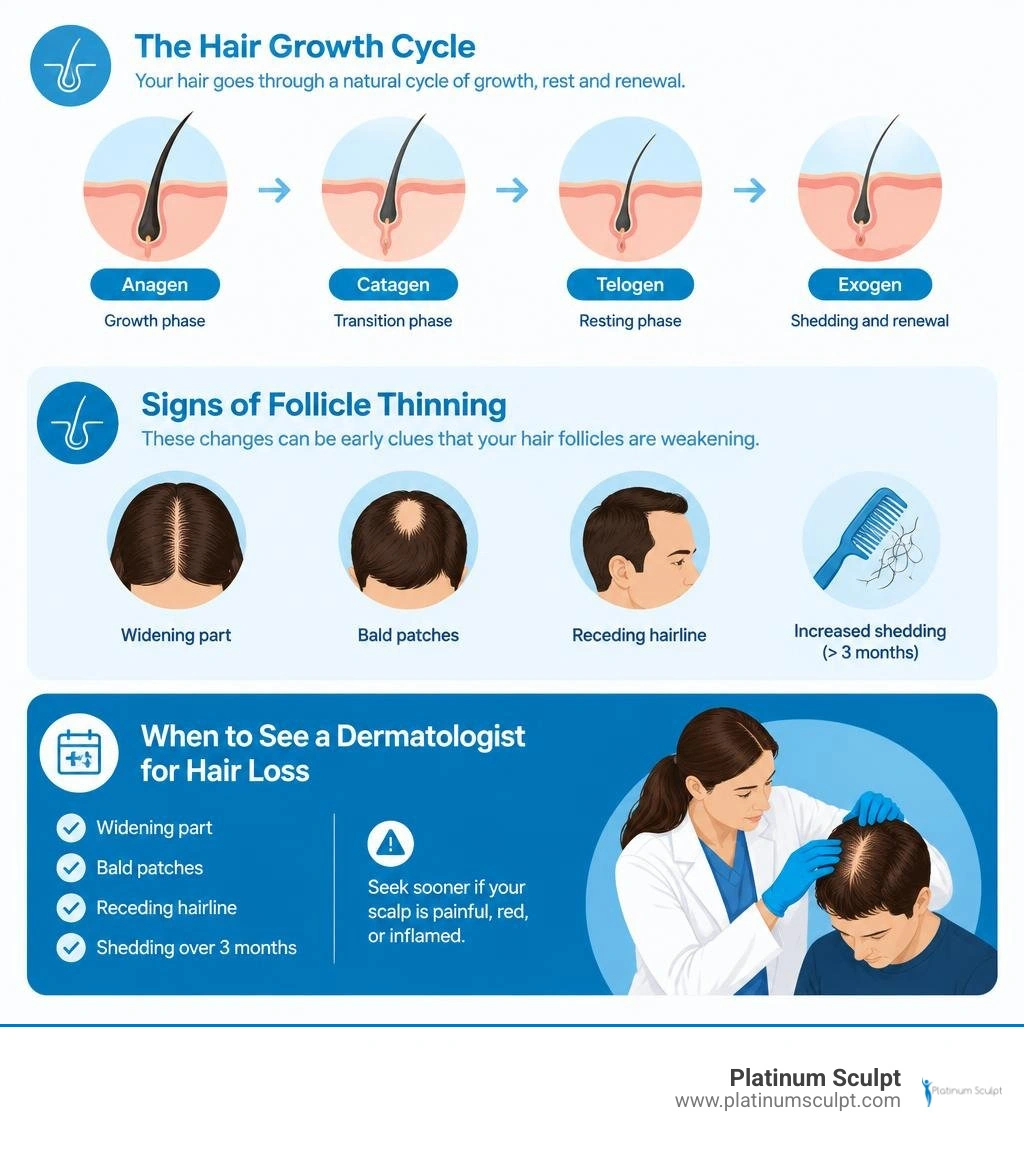
Hair shedding is a natural part of daily life, with most individuals losing between 50 and 100 strands per day. When daily loss increases noticeably or scalp coverage diminishes, distinguishing between temporary shedding and progressive thinning becomes essential. Consulting a specialist early helps identify the root mechanism before follicles experience significant miniaturization.
Differentiating acute stress responses from long-term hereditary changes requires clinical assessment. Exploring identifying persistent shedding triggers can clarify whether recent lifestyle events are contributing to active shedding.
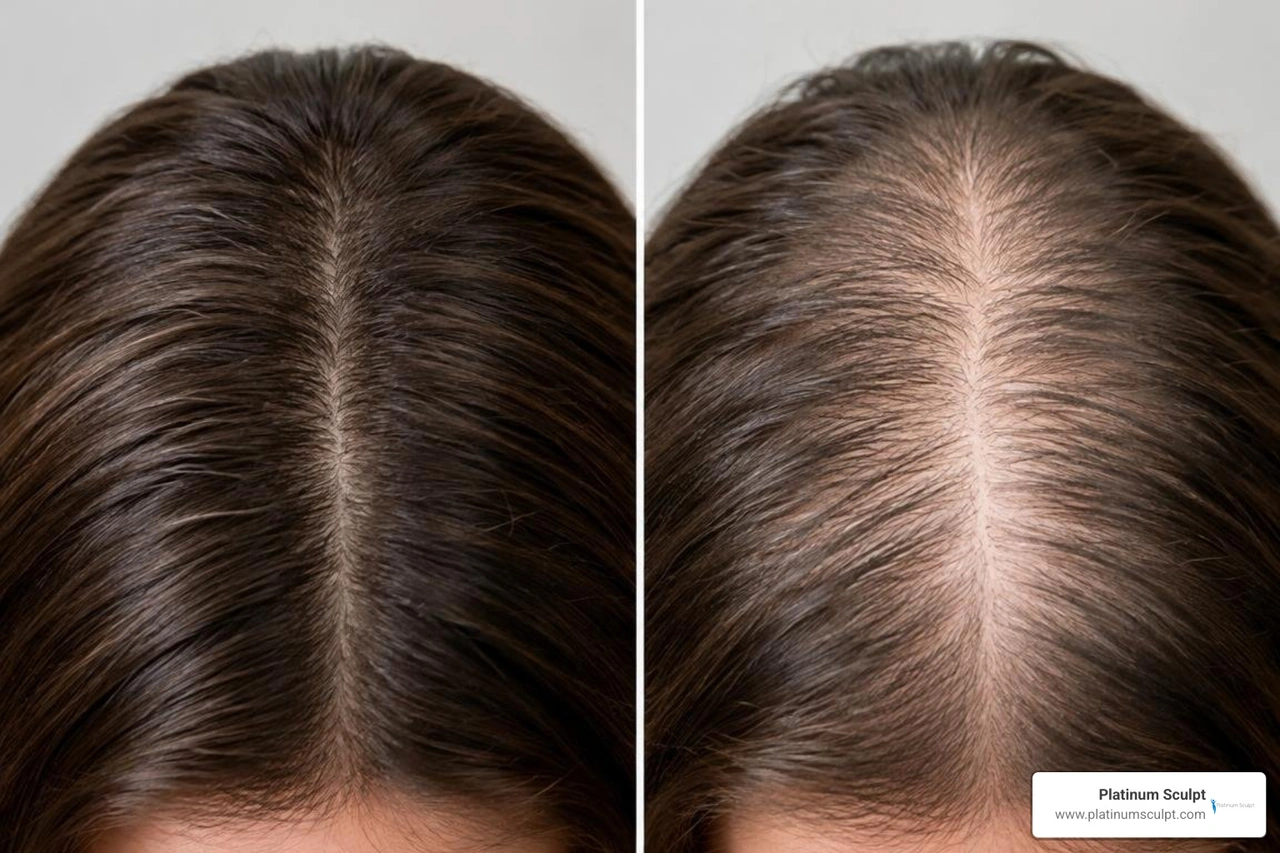
Recognizing early shifts in hair density allows for more effective stabilization. Key patterns to monitor include:
Sudden shifts in shedding often follow major physical stressors by two to three months due to telogen effluvium. Understanding the signs of seasonal and chronic shedding provides clear context on how environmental shifts and cyclical resting phases impact overall strand retention.
Hair loss originates from various internal and external drivers. Identifying the precise category directs appropriate medical therapy:
A formal evaluation outlines evidence-based paths as detailed in clinical diagnosis and treatment protocols. Women experiencing hormone-related shifts can also review female pattern hair loss causes to better understand how hormonal fluctuations impact follicular health.
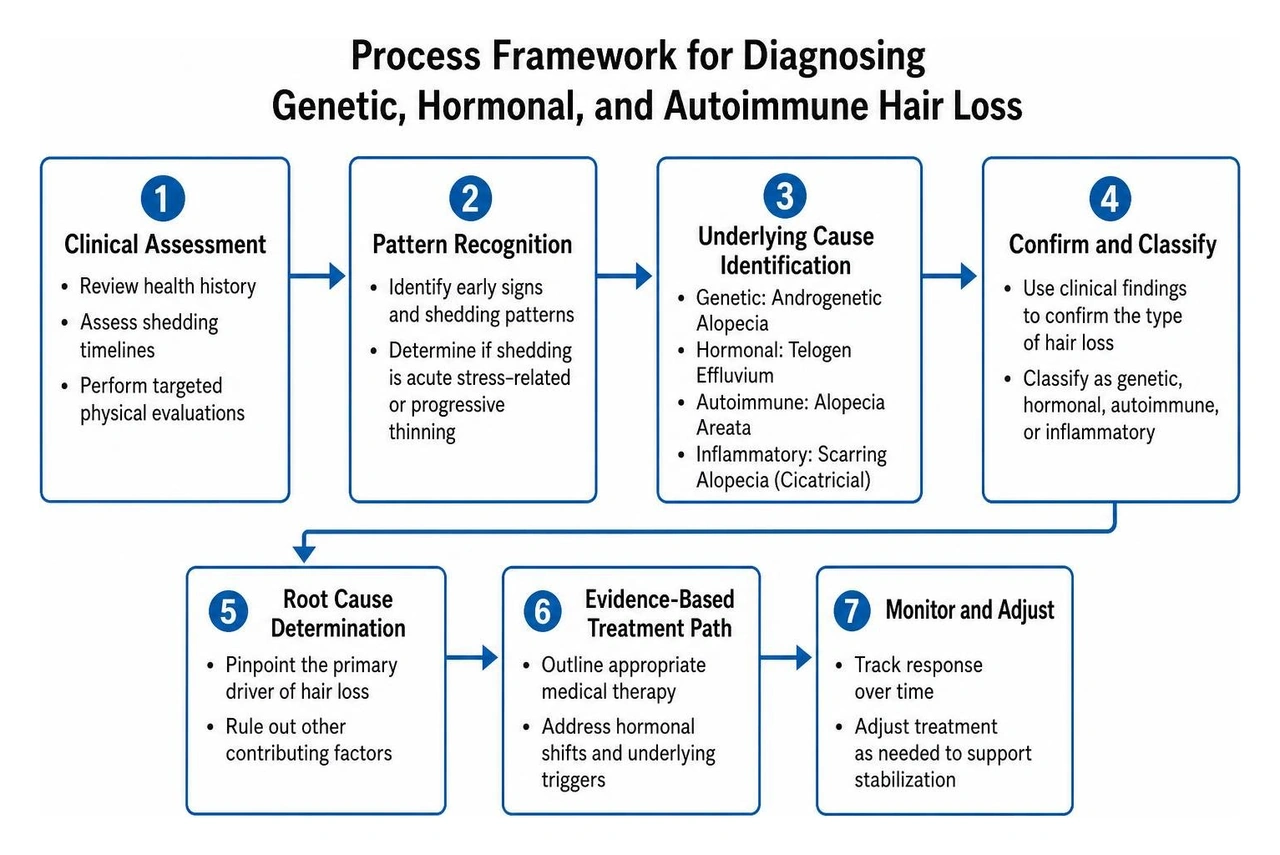
A clinical hair evaluation provides a thorough assessment of follicle structure, scalp health, and underlying systemic factors. Major medical centers evaluate thousands of complex cases annually, with more than 5,000 individuals seeking specialized care each year as outlined in the Mayo Clinic specialized hair loss care overview. During your visit, the practitioner will review your health history, assess shedding timelines, and perform targeted physical evaluations.
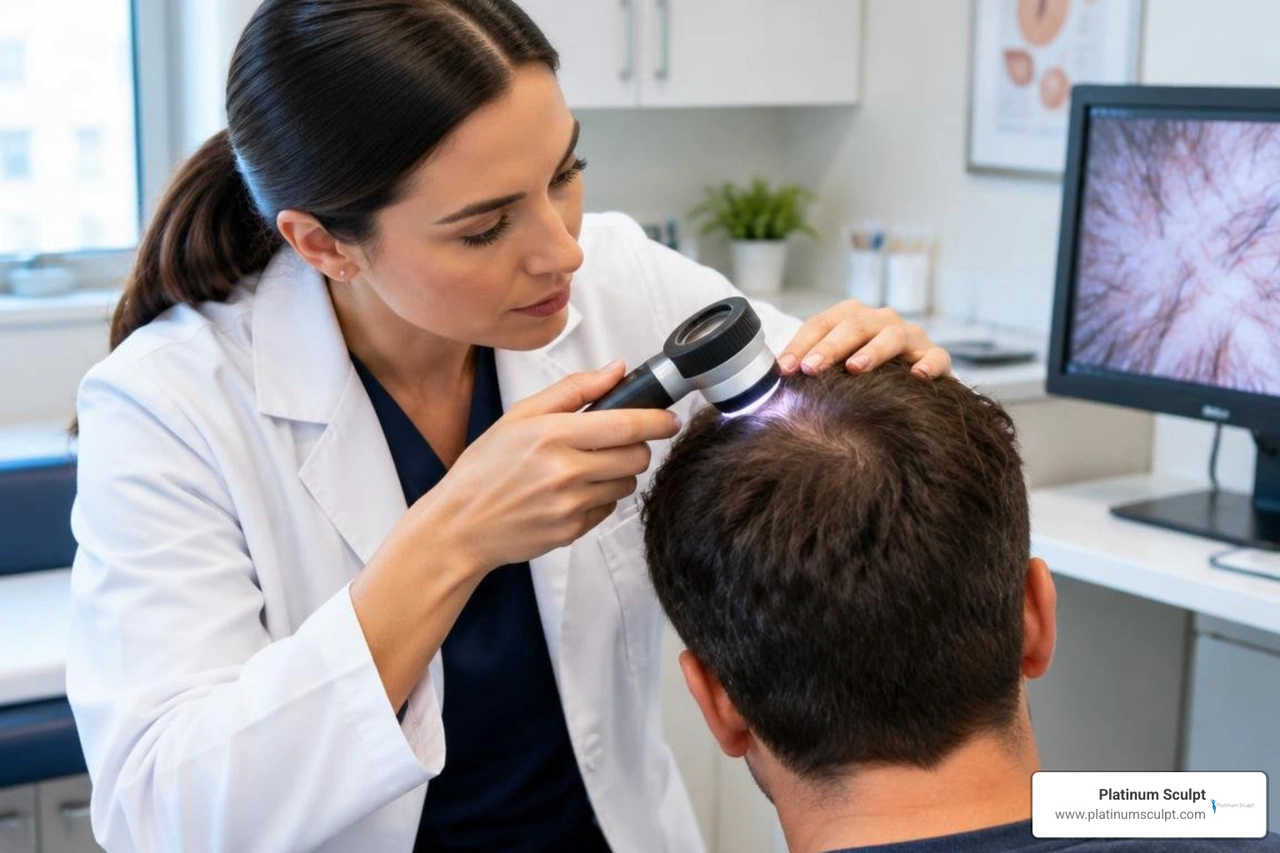
Preparation ensures accurate diagnostic results during your initial consultation:
Specialists utilize specific clinical tools to establish an accurate diagnosis:
Achieving meaningful stabilization and regrowth often involves combining targeted medical therapies with advanced clinical procedures.
| Treatment Modality | Primary Mechanism | Typical Clinical Timeline | Best Suited For |
|---|---|---|---|
| Topical Minoxidil | Vasodilation, extends anagen growth phase | 6 to 12 months for measurable density | Pattern hair loss, diffuse thinning |
| Oral Finasteride | Inhibits 5-alpha reductase, reduces DHT | Noticeable improvement starting at 4 months | Male androgenetic alopecia |
| Oral Spironolactone | Blocks androgen receptors, lowers DHT | 6 to 12 months for stabilization | Female pattern hair loss |
| Corticosteroid Injections | Suppresses localized autoimmune inflammation | Visible regrowth within 12 weeks | Alopecia areata |
| In-Office Regenerative Therapy | Growth factors and follicular stimulation | Series of 3 to 6 monthly sessions | Thinning hair, follicle revitalization |
Prescription options address the biochemical triggers of thinning:
Clinical procedures provide targeted stimulation directly to the scalp environment:
Make the most of your medical consultation by asking specific, actionable questions:
Spontaneous regrowth is common when hair loss is triggered by acute, self-limiting events. Conditions such as telogen effluvium following childbirth, temporary illness, high fever, or significant psychological stress typically resolve within six to nine months once the underlying trigger is removed. Mild initial presentations of alopecia areata can also experience spontaneous recovery. In contrast, hereditary androgenetic alopecia and inflammatory scarring alopecias are progressive and require medical intervention to preserve follicular density.
Nutritional supplements support hair density primarily when a true biological deficiency exists. Low levels of serum ferritin, vitamin D, or zinc can impair normal protein synthesis within the hair matrix. Correcting documented deficiencies through targeted supplementation can help restore normal growth cycles. Taking excess amounts of unprescribed vitamins without lab confirmation does not speed hair growth and can lead to unwanted systemic side effects.
Washing your hair does not cause active hair loss. Strands released during shampooing or conditioning have already detached from the dermal papilla weeks earlier during the telogen resting phase. Gentle washing removes excess sebum, environmental debris, and dead skin cells, helping maintain a balanced scalp microbiome that supports follicle health.
Addressing hair loss successfully begins with early clinical evaluation and an accurate diagnosis. Preserving active follicles is far more achievable than reviving dormant ones, making timely medical assessment the best path forward. Combining clinical diagnostics with targeted restorative care helps establish long-term scalp health and sustainable growth.
Platinum Sculpt is a luxury med spa located in Bowling Green, Lexington, and Winchester, KY, specializing in body contouring, injectables, skin tightening and laser resurfacing, facials, hair restoration, and medical weight loss and wellness. Service availability varies by location: HydraFacial is offered at Bowling Green only; DiamondGlow is offered at Lexington only; TotalSkin Solution is exclusive to Lexington and Bowling Green. The Winchester clinic focuses on injectables, weight loss, laser resurfacing, hair restoration, IV infusions, GeniusRF, and PDGF under-eye treatment.
Restorative aesthetic treatments can help revitalize thinning areas, but results vary based on individual physiology and the underlying cause of shedding. If you are experiencing hair thinning, we invite you to book a free consultation to review your scalp health and explore our advanced restoration solutions. Call our Bowling Green office at 270-714-9964 or our Lexington and Winchester locations at 859-762-2664 to schedule your appointment.


