

Or call us at for a free consultation!
Bowling Green: (270) 714-9964
Lexington: (859) 762-2664
Winchester: (859) 762-2664

How long PDGF lasts under the eyes is not yet known with certainty. Skin changes may appear gradually over 4 to 12 weeks, and results are not permanent. Studies of related platelet-based under-eye treatments suggest that texture improvements can fade around six months, but that is not a proven timeline for PDGF itself.
Sun protection and a gentle skin-care routine may help support your results. If you are considering PDGF under-eye treatment, book a consultation at Platinum Sculpt's Winchester location to discuss what changes are realistic for your skin and when to reassess them.
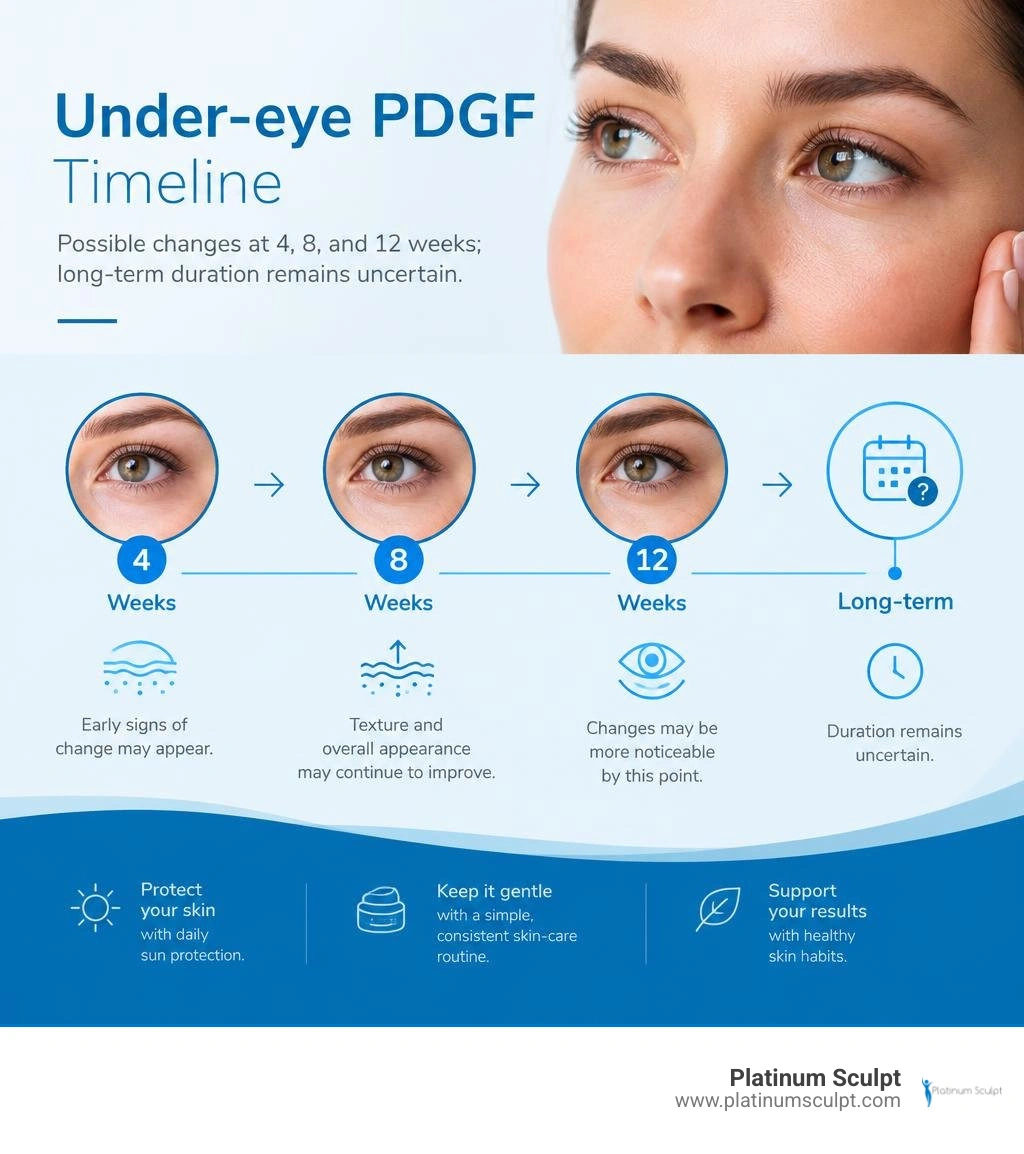
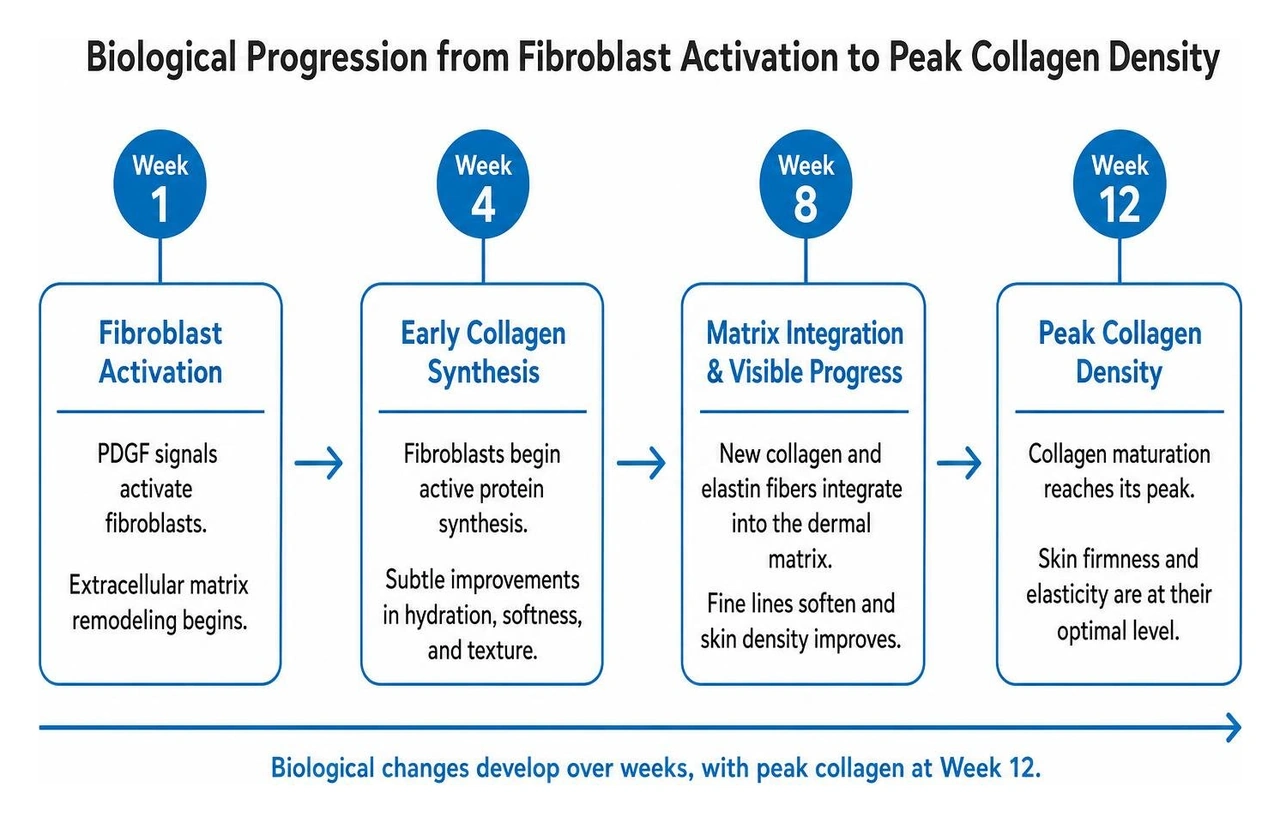
When evaluating regenerative aesthetic treatments, understanding the timeline of biological changes helps set realistic expectations. Platelet-derived growth factor (PDGF) works by signaling specific cellular pathways within the periorbital tissue. Instead of acting as an immediate physical space-occupier, recombinant PDGF-BB proteins bind to cell receptors, instructing fibroblasts to initiate extracellular matrix remodeling and synthesize new type I and type III collagen fibers.
Because this biostimulatory process relies on your body's natural regenerative mechanisms, visible improvements develop over weeks rather than appearing overnight. In current aesthetic literature, clinical findings on periorbital growth factor longevity and platelet-based therapies indicate that visible skin texture refinements often begin to fade by approximately six months. While research such as published clinical observations in aesthetic growth factor applications demonstrates meaningful collagen stimulation and tissue repair, individual durability varies significantly based on internal biology and ongoing external skin stress.
The aesthetic changes associated with PDGF unfold through specific biological phases:
Following this peak at week 12, the newly synthesized collagen remains subject to natural cellular turnover. Experiencing under-eye rejuvenation with PDGF treatments allows patients to establish a baseline of dermal structural support that can be sustained through strategic periodic appointments.
Several individual variables influence how long pdgf under-eye last in everyday life:
Addressing these lifestyle components plays a key role when rejuvenating tired eyes and dark circles.
Effectively sustaining under-eye improvements requires selecting the right aesthetic modality for your specific anatomical concern. A clear distinction exists between regenerative growth factor therapy and traditional dermal fillers.
| Attribute | PDGF Therapy | Hyaluronic Acid Dermal Fillers |
|---|---|---|
| Primary Mechanism | Cellular signaling to stimulate natural collagen, elastin, and angiogenesis | Physical gel placement to occupy anatomical space |
| Primary Target | Superficial fine lines, crepey skin texture, dermal thinning | Deep structural hollows and severe tear trough deficits |
| Onset of Results | Gradual biological progression over 4 to 12 weeks | Immediate visible volume enhancement |
| Expected Longevity | Typically maintained with semi-annual touch-ups (~6 months) | Typically 6 to 12 months (occasionally up to 18 months) |
| Reversibility | Non-reversible (natural cellular turnover over time) | Dissolvable with hyaluronidase injections |
| Risk of Swelling/Puffiness | Minimal, temporary procedural edema | Potential for delayed fluid retention or Tyndall effect |
For individuals with thin, crepey skin or visible vascular shadow who do not require physical structural volume, growth factor biostimulation provides a refined, non-volumizing approach to skin quality.
PDGF functions by initiating targeted cell communication. Once applied to the tissue via specialized clinical protocols, recombinant PDGF-BB engages platelet-derived growth factor receptors on resident fibroblasts. This cellular trigger accelerates the production of collagen types I and III, while encouraging healthy microvascular formation (angiogenesis).
As dermal density increases, the translucent lower eyelid skin thickens slightly, which can help diminish the dark, bluish cast caused by visible underlying blood vessels. Because these cellular benefits depend on living biological responses, the duration of improvement reflects the natural lifecycle of your body's structural proteins.
Because growth factors do not halt the natural aging process, aesthetic planning must account for ongoing collagen breakdown. A structured long-term plan prevents the periorbital tissue from returning fully to its baseline state.
During an initial evaluation, your provider assesses skin thickness, laxity, and lifestyle habits to determine whether a biostimulatory series aligns with your goals. Establishing clear maintenance checkpoints allows us to adjust application techniques and combine complementary aesthetic therapies as your skin matures.
Maximizing the longevity of your PDGF outcomes requires combining scheduled professional treatments with targeted daily aftercare habits.
Achieving sustained dermal density typically begins with an initial series rather than a single standalone session:
What you do at home directly impacts how long newly formed collagen fibers survive:
PDGF treatments are not permanent. While the collagen and elastin synthesized during the 12-week remodeling phase become part of your living tissue, your body naturally degrades structural proteins over time through routine metabolic processes and UV exposure. Periodic touch-up appointments, typically around the six-month mark, help sustain skin density and maintain a refreshed look.
Most aesthetic protocols recommend an initial series of two to three sessions spaced four weeks apart. This multi-step process allows successive waves of cellular signaling to build extracellular matrix thickness gradually, providing a stronger foundation than a single application.
If fine lines, crepiness, or skin dullness begin to reappear, schedule a reassessment consultation with your aesthetic provider. A single maintenance session can help re-engage fibroblast activity. Your provider may also evaluate whether complementary modalities, such as gentle laser resurfacing or advanced skin tightening, could provide additional structural support.
Understanding the biological timeline of platelet-derived growth factors ensures you can plan your under-eye care with confidence. While individual longevity varies and results are not permanent, a structured treatment series combined with diligent sun protection and consistent maintenance can help you achieve healthy, refined periorbital skin.
Platinum Sculpt is a luxury med spa located in Bowling Green, Lexington, and Winchester, KY, specializing in body contouring, injectables, skin tightening and laser resurfacing, facials, hair restoration, and medical weight loss and wellness. Please note our location-specific services: HydraFacial is offered at Bowling Green only; DiamondGlow is offered at Lexington only; TotalSkin Solution is exclusive to Lexington and Bowling Green; Winchester does not offer HydraFacial, CoolSculpting, CoolTone, or facials, but focuses on injectables, weight loss, laser resurfacing, hair restoration, IV infusions, GeniusRF, and PDGF under-eye treatment.
To explore a personalized treatment plan for your skin, schedule a consultation for under-eye rejuvenation with our expert team today. For questions or to book your appointment, call our Lexington and Winchester team at 859-762-2664 or our Bowling Green location at 270-714-9964.


