

Or call us at for a free consultation!
Bowling Green: (270) 714-9964
Lexington: (859) 762-2664
Winchester: (859) 762-2664

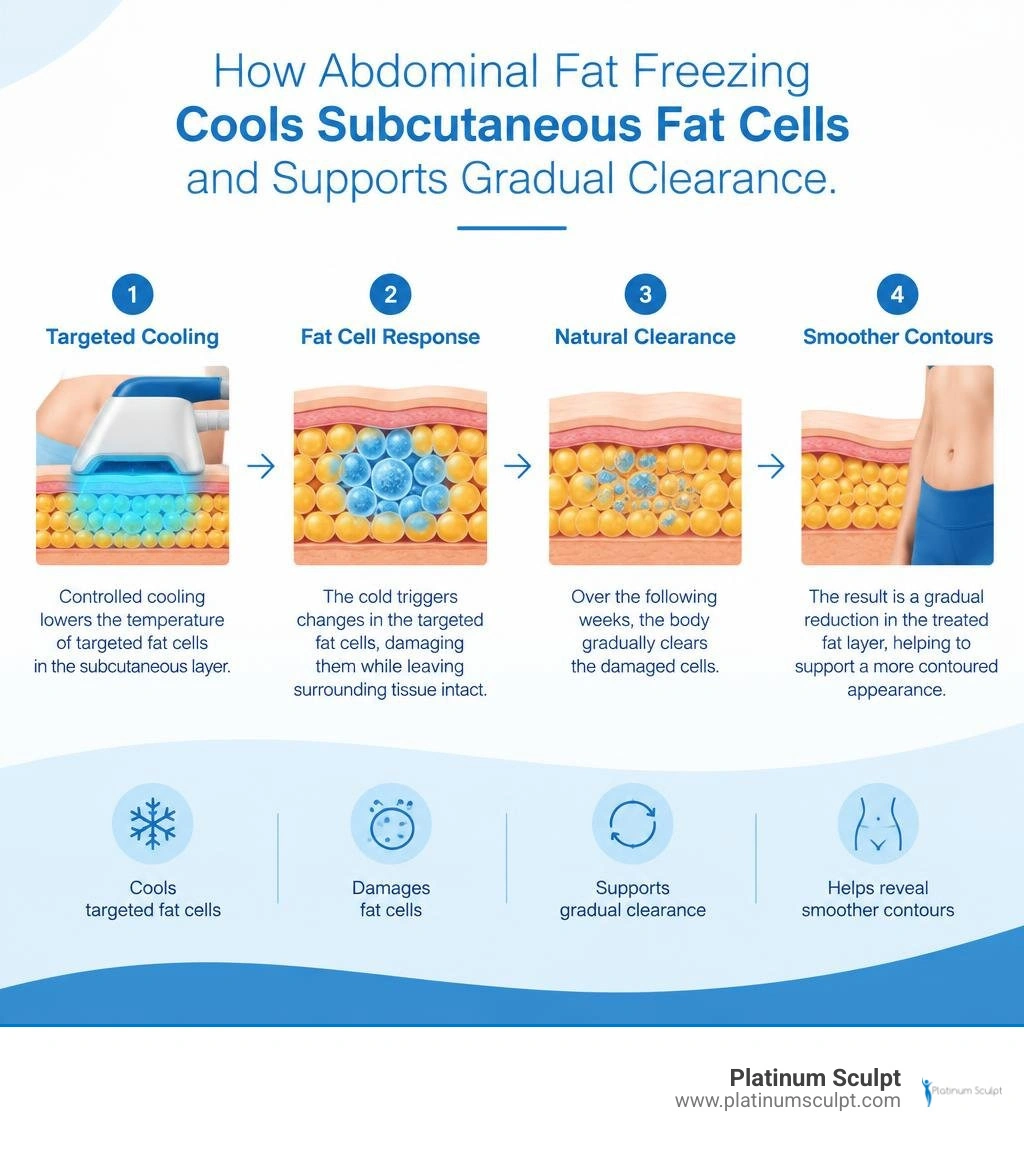
Abdominal fat freezing, also called cryolipolysis, is a non-surgical treatment that uses controlled cooling to reduce small pockets of pinchable fat beneath the skin. It is designed for body contouring, not weight loss. A qualified provider places an applicator over the treatment area, and the cooling process damages targeted fat cells while leaving the surrounding skin and tissue intact.
Over the following weeks, the body gradually clears those damaged cells. Many people begin to notice a change at about three weeks, with fuller results commonly visible around three months. Studies and clinical experience suggest that one treatment may reduce the treated fat layer by roughly 10% to 25%, though results vary.
This approach may be a fit for adults who are near a stable weight but want help with diet-resistant abdominal fat. It cannot replace healthy habits or reliably treat deep visceral fat around the organs.
Platinum Sculpt offers body contouring consultations in Bowling Green, Lexington, and Winchester, KY. CoolSculpting is available in Bowling Green, where results are guaranteed in writing under practice policy. A consultation can help determine whether abdominal cryolipolysis matches your goals and anatomy.
Similar topics to abdominal fat freezing:
Many people maintain active lifestyles and balanced nutrition yet struggle with persistent pockets of fat across the midsection. Cryolipolysis addresses this challenge by capitalizing on the thermal sensitivity of lipid-rich cells compared to water-rich surrounding tissues.
Adipocytes (fat cells) crystallize at higher temperatures than peripheral tissues like nerves, muscles, and skin cells. When precise cooling is applied to a targeted zone, it initiates a natural cell death sequence termed apoptosis.
Once adipocytes undergo apoptosis, they lose structural integrity. Over the subsequent weeks and months, the immune system responds naturally. Macrophages surround and digest the damaged cells, transporting the cellular debris through the lymphatic system for standard metabolic processing. This gradual elimination helps avoid acute spikes in blood lipid levels or liver function enzymes.
Modern cryolipolysis systems deliver regulated thermal energy extraction, lowering tissue temperatures within a strictly controlled therapeutic range (typically between -5°C and -11°C depending on the applicator and profile).
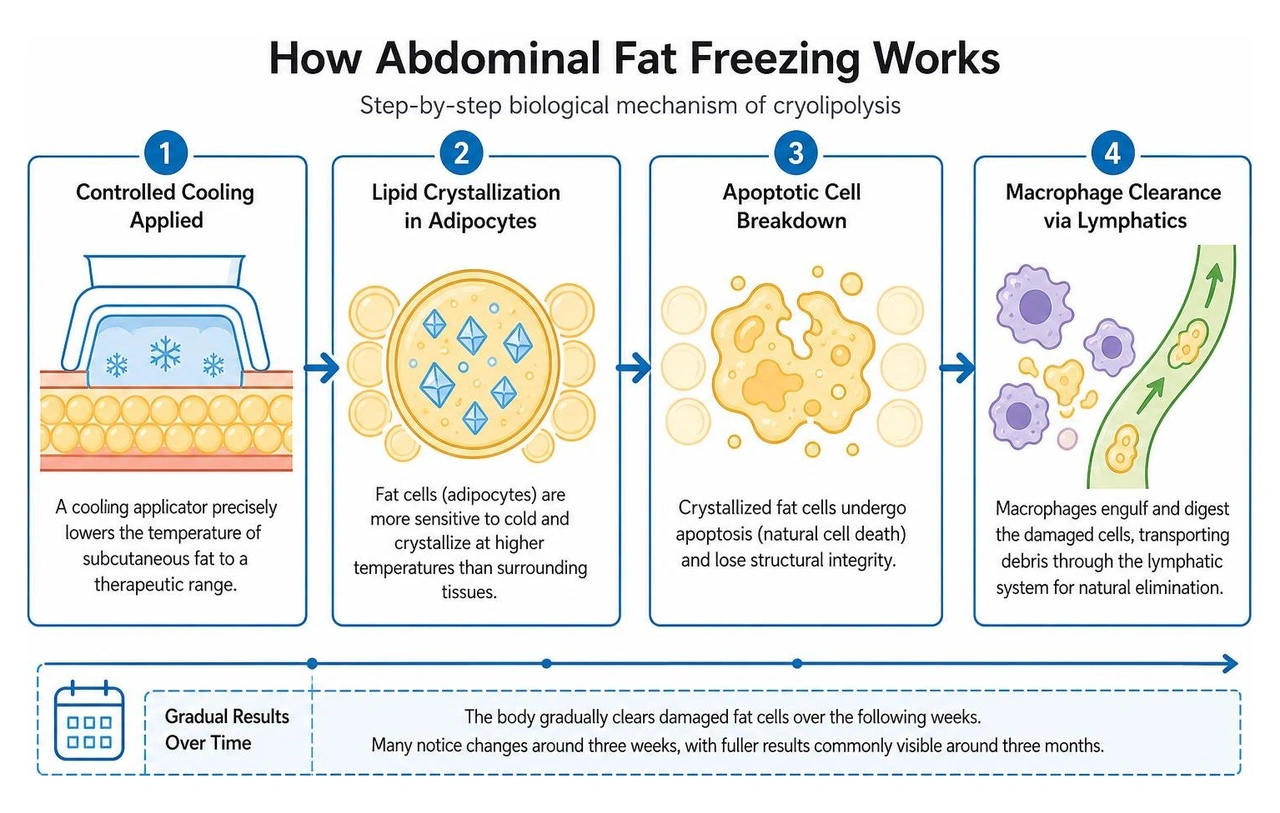
This thermal drop triggers crystallization within the intracellular lipids without causing epidermal frostbite or structural necrosis in connective tissues. A detailed look into the adipose tissue reduction mechanism shows that inflammatory cellular responses peak roughly one to two weeks following exposure, leading to progressive thinning of the localized fat deposit.
Patients often ask about the long-term metabolic pathway of these broken-down cells. As covered in our guide on the fat-cell clearance process, the processed cellular components are naturally metabolized and eliminated just like any other dietary or organic cellular waste.
Understanding abdominal anatomy is essential when determining if cryolipolysis is the appropriate intervention. The body stores abdominal fat in two distinct compartments:
Cryolipolysis is specifically engineered to target subcutaneous adipose tissue. It cannot be used directly as a primary medical therapy for intra-abdominal visceral adiposity. However, interesting clinical insights have emerged; scientific research on visceral fat changes after cryolipolysis using split-body CT imaging demonstrated a 15.6% decrease in cross-sectional visceral adipose tissue area on the treated side at 12 weeks, suggesting broader physiological responses to localized cryo-exposure.
Even so, when it comes to treating stubborn stomach fat, non-invasive cooling focuses on external body contouring rather than treating underlying visceral metabolic risk.
Clinical evaluations consistently demonstrate that cryolipolysis provides noticeable reductions in localized fat thickness. Across published medical trials, a single treatment cycle typically produces a 10% to 25% reduction in the thickness of the targeted subcutaneous fat layer.
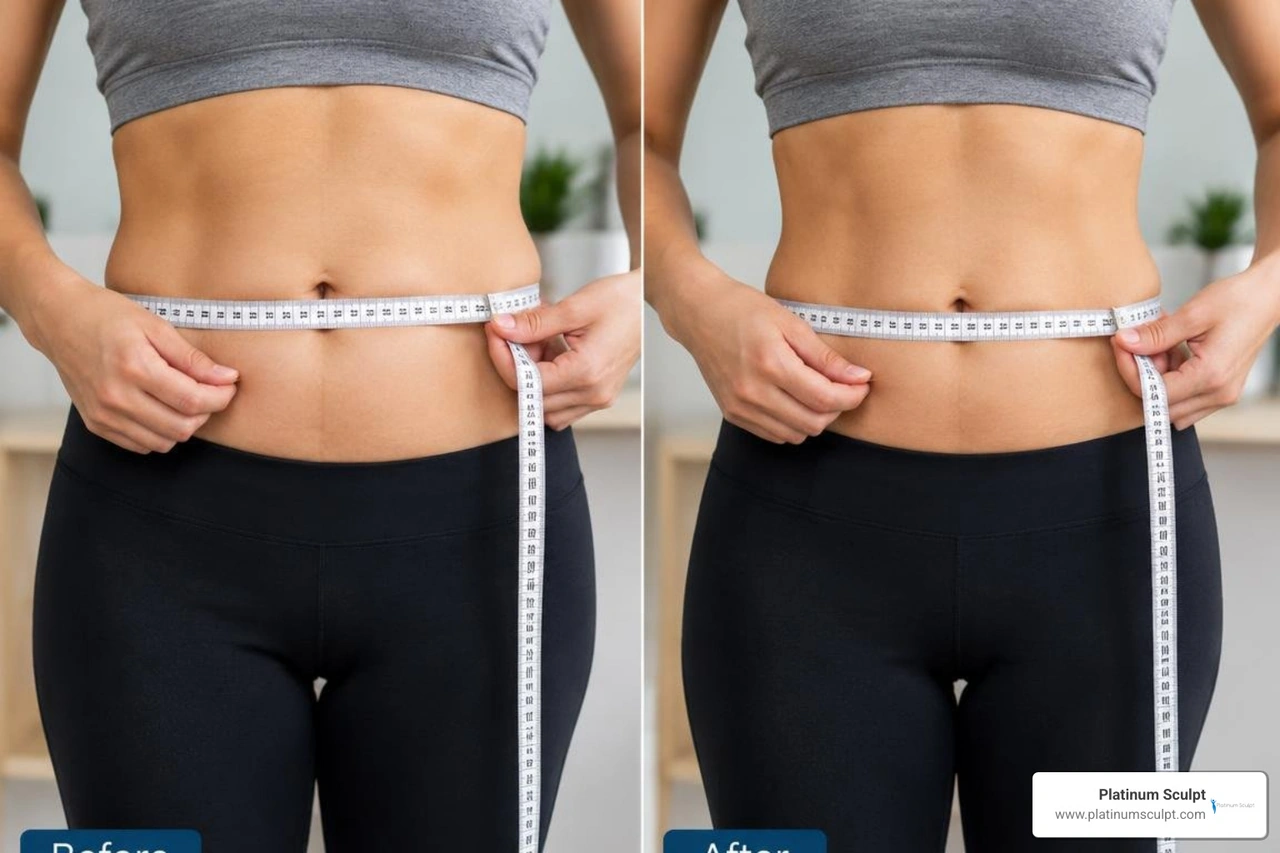
In individual clinical evaluations (Meyer et al., 2016), measurable outcomes have included an average reduction in abdominal circumference of approximately 3.53 cm, alongside a fat-layer thickness reduction of up to 1.46 cm verified by ultrasound imaging.
A critical step during clinical application is the immediate two-minute post-treatment manual massage. Performing this targeted massage right after the applicator is removed fractures crystallized adipocytes, significantly increasing cellular clearance and optimizing overall circumferential reduction compared to passive rewarming.
Because cryolipolysis relies on your body's immune and lymphatic systems to clear damaged cells, changes develop gradually:
To better understand these timelines and how cooling shapes the physique, review our overview on CoolSculpting fundamentals and body sculpting. Once fat cells are destroyed and eliminated, they do not regenerate; maintaining a stable weight helps preserve these contour improvements over the long term.
Cryolipolysis is designed to work with your body's own clearance systems rather than requiring incisions or extended downtime. When evaluating body contouring options for stomach fat, it helps to understand that each session involves placing a cooling applicator over the treatment area for 35 to 60 minutes, with most patients returning to normal activities immediately afterward. Results build gradually as the body processes the treated fat cells, and a consultation can help determine how many sessions may be appropriate for your goals.
Ideal candidates for abdominal fat freezing are healthy adults who are close to their target weight (generally within 30 pounds or possessing a BMI under 30) but carry localized, diet-resistant subcutaneous fat pockets.
Cryolipolysis is not suitable for everyone. Absolute contraindications include cold-related medical disorders such as:
Common, temporary side effects include localized erythema (redness), bruising, mild edema, tingling sensations, firmness, and temporary cutaneous numbness. These effects generally resolve spontaneously within several days to a few weeks following the procedure.
While cryolipolysis has an established safety record spanning millions of procedures worldwide, rare complications exist. The most notable rare adverse event is Paradoxical Adipose Hyperplasia (PAH).
PAH occurs when targeted fat cells unexpectedly enlarge rather than diminish, forming a painless, demarcated mass resembling the shape of the applicator. In a comprehensive multi-center retrospective review of 3,262 patients receiving 18,203 cycles, the incidence rate of PAH was documented between 0.018% and 0.048% per cycle (roughly 1 in every 2,000 to 5,500 treatment cycles). When PAH occurs, it generally becomes visible several months post-treatment and can be addressed through secondary corrective procedures.
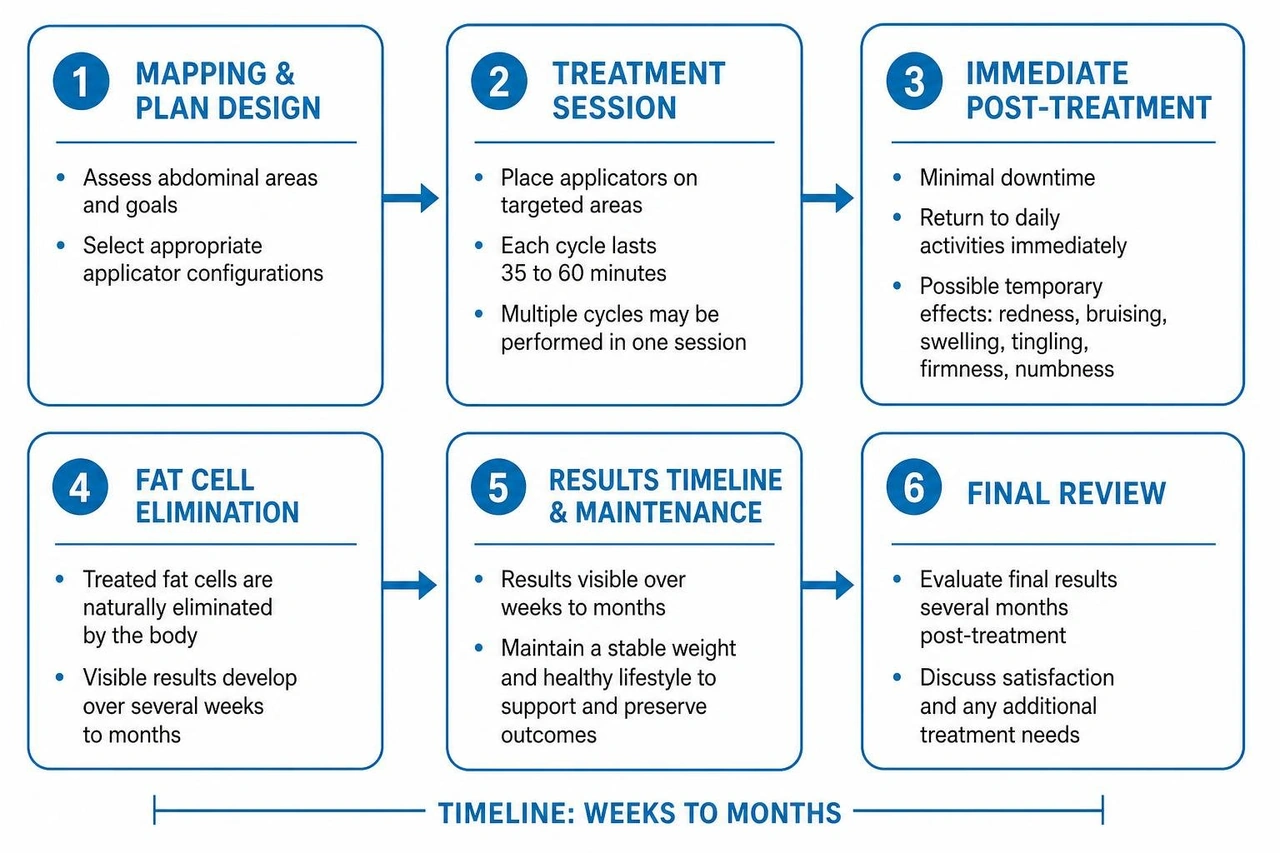
A customized abdominal cryolipolysis plan begins with mapping the abdomen to select the appropriate applicator configurations. The lower abdomen is the most frequently treated area, often utilizing contoured vacuum applicators designed to maintain full contact across curved tissue.
Each treatment cycle lasts between 35 and 60 minutes. Depending on individual anatomy and aesthetic goals, a patient might receive multiple cycles across the upper and lower abdomen during a single session.
The national average cost for non-invasive fat freezing treatments typically falls around $1,723, with broader treatment plans ranging from $1,432 to $5,008 depending on the number of cycles and areas treated. Because cryolipolysis is an elective aesthetic procedure, it is not covered by standard health insurance. However, patients frequently utilize medical financing options, such as CareCredit, to divide payments into manageable monthly schedules. For detailed regional pricing breakdowns, review our guide on average pricing factors for stomach CoolSculpting.
Most patients achieve their personal contouring goals within 1 to 3 treatment sessions per area, spaced 8 to 12 weeks apart. During each session, multiple cycles may be placed to address both the upper and lower abdomen evenly. Providers design customized stomach CoolSculpting treatments based on baseline subcutaneous fat volume and personal body proportions.
Cryolipolysis is an FDA-cleared, non-invasive method for reducing localized subcutaneous fat. Once the exposed fat cells undergo apoptosis and are metabolized by the body, those specific cells are gone permanently. While results vary from person to person, maintaining a stable weight ensures that remaining untreated adipocytes do not expand. You can read more about common inquiries in our frequently asked questions about CoolSculpting.
Cryolipolysis is primarily engineered for subcutaneous fat volume reduction rather than primary skin tightening. However, minor secondary tissue retraction can occur as a natural result of the body's inflammatory and healing response. For individuals seeking targeted belly fat reduction in Lexington who present with both localized fat and noticeable skin laxity, combination plans incorporating radiofrequency skin tightening therapies may be discussed during consultation.
Abdominal cryolipolysis offers a clinically proven, non-surgical pathway to contour stubborn subcutaneous belly fat without needles, surgical incisions, or extensive recovery periods. By selectively cooling targeted adipocytes, this procedure helps reduce localized fat pockets when combined with an active, healthy lifestyle.
Platinum Sculpt is a luxury med spa located in Bowling Green, Lexington, and Winchester, KY, specializing in body contouring, injectables, skin tightening and laser resurfacing, facials, hair restoration, and medical weight loss and wellness. We take pride in delivering an exceptional patient experience across all our practices:
To find out if you are a candidate for abdominal body contouring, schedule a CoolSculpting consultation with our team.
Meyer PF, da Silva RM, Oliveira G, Tavares MA, Medeiros ML, Andrada CP, Neto LG. "Effects of Cryolipolysis on Abdominal Adiposity.." Case reports in dermatological medicine, 2016. PMCID PMC5118516.
.svg)


