

Or call us at for a free consultation!
Bowling Green: (270) 714-9964
Lexington: (859) 762-2664
Winchester: (859) 762-2664
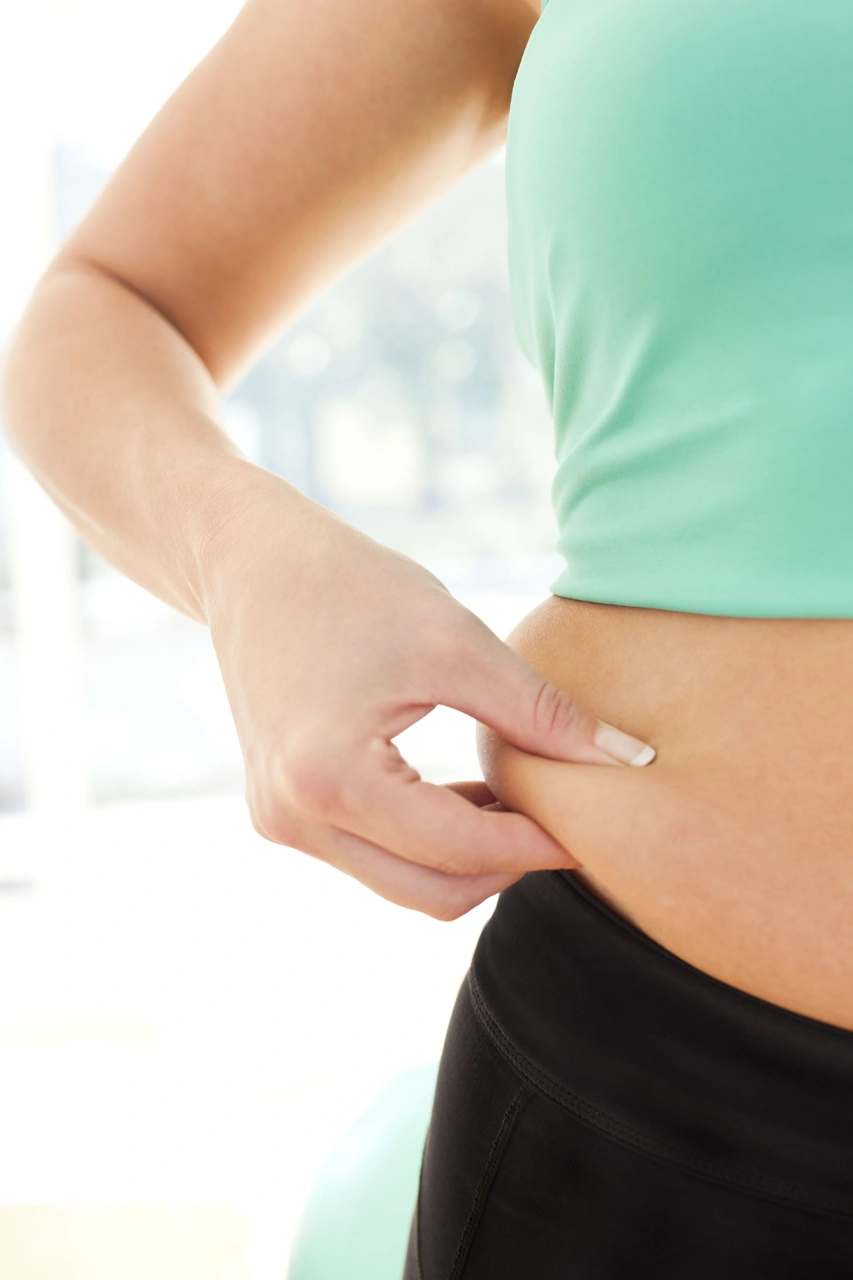
CoolSculpting after pregnancy is generally considered safest after a 3 to 6 month postpartum waiting window, once you have received medical clearance and completed breastfeeding. This timing gives your body space to recover from delivery, stabilize fluid shifts, and settle into a more reliable weight baseline before elective body contouring. Your OB-GYN or primary care provider should confirm that healing is progressing appropriately before you schedule treatment.
Navigating postpartum body changes requires patience because the body continues to shift long after delivery. Safe planning begins by respecting fundamental postpartum healing milestones. Uterine involution, fluid regulation, and internal tissue repair must occur naturally before elective body contouring takes place. Medical clearance from your primary care provider or OB-GYN ensures that your baseline health is restored before scheduling aesthetic procedures.
Following established safe timing guidelines for postpartum body recovery provides a structured roadmap for deciding when aesthetic treatments fit into your routine. Treating the abdomen prematurely, before deep structural healing concludes, can lead to unnecessary discomfort or compromised results. Natural swelling, fluid retention, and ongoing abdominal contraction alter the tissue depth, making early evaluations less reliable for establishing accurate treatment boundaries. A consultation can also help separate normal postpartum changes from fat deposits that may respond to treatment.
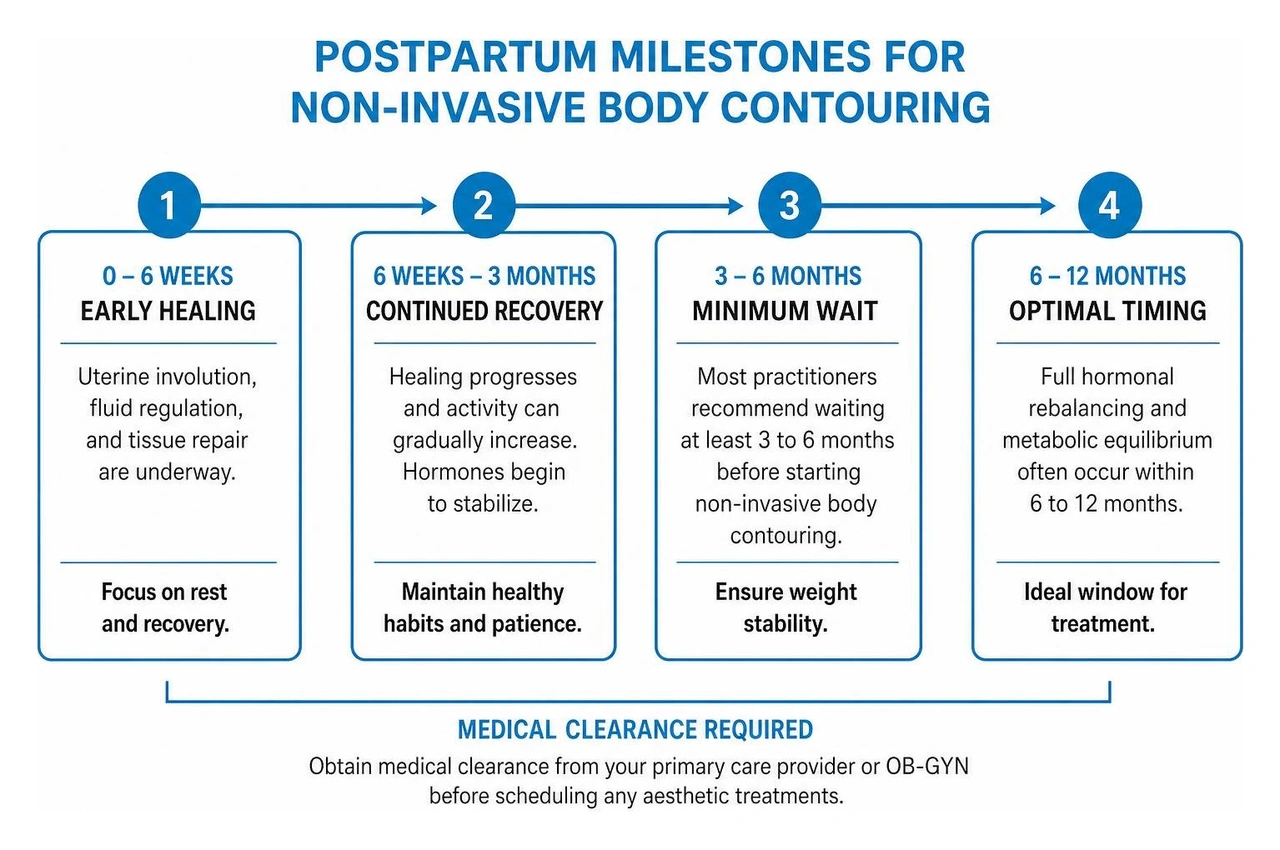
Hormonal balance plays an important role in how fat is distributed and retained following childbirth. Elevated levels of hormones such as relaxin, estrogen, and progesterone gradually decline over several months. Relaxin keeps connective tissues and ligaments loose to facilitate birth, and its lingering presence means abdominal wall structures remain flexible for months after labor. Most clinical practitioners recommend a minimum 3 to 6 month waiting window before starting non-invasive body contouring.
Full hormonal rebalancing and metabolic equilibrium often require 6 to 12 months. Starting treatments only after your weight has stabilized ensures that the fat layer assessed during your evaluation reflects your true baseline. Learning the basics in our guide on CoolSculpting 101 helps clarify how controlled cryolipolysis isolates stubborn tissue once your body finishes its natural recovery process.
Mothers who deliver via Cesarean section must account for deeper tissue recovery alongside surface healing. C-section incision healing generally requires 8 to 10 weeks before the superficial scar matures, but internal fascial and muscular layers need adequate time to rebuild tensile strength. Placing vacuum applicators over tender, desensitized, or recently healed surgical scars too early can cause irritation or disrupt healing tissue planes.
Breastfeeding status is equally vital when planning cryolipolysis. Providers recommend waiting until lactation has fully concluded before undergoing treatments. Nursing sustains elevated prolactin levels, which influence maternal fluid retention and systemic fat storage patterns. Active breast tissue must always be avoided during body contouring, and postponing sessions until after weaning guarantees that your hormonal baseline is steady.
A protruding midsection after childbirth typically stems from three distinct anatomical factors: subcutaneous fat accumulation, lax skin, or separated abdominal muscles. Determining the exact source of tissue fullness is essential because CoolSculpting specifically targets subcutaneous fat deposits located directly beneath the skin. Visceral fat, which sits beneath the abdominal muscle wall around internal organs, cannot be reached by topical cooling applicators.
The following table outlines how these common postpartum conditions differ in presentation and treatment suitability:
| Condition | Primary Cause | Physical Presentation | Responsive to CoolSculpting? |
|---|---|---|---|
| Subcutaneous Fat | Adipose tissue storage | Soft, pliable, pinchable fat layer | Yes, suitable for targeted cryolipolysis |
| Loose Skin (Laxity) | Stretched dermal collagen and elastin | Thin, crepey, or hanging skin folds | No, requires dedicated skin-tightening modalities |
| Diastasis Recti | Stretched linea alba and muscle separation | Ridge, dome, or central gap during exertion | No, requires core rehabilitation or surgical repair |
| Visceral Fat | Deep internal adipose tissue | Firm, rounded, non-pinchable protrusion | No, responds primarily to dietary and lifestyle changes |
A proper candidate assessment focuses on the presence of pliable, pinchable adipose tissue. During an evaluation, a specialist measures the depth, density, and pliability of the localized fat layer to verify whether standard cooling cups can achieve appropriate tissue contact and continuous vacuum seal.
When examining belly fat response to cryolipolysis, targeted fat cell cooling crystalizes lipids within adipose cells without damaging the overlying dermal layers or adjacent muscle walls. If the tissue cannot be easily gathered into an applicator, or if the abdominal fullness is primarily caused by internal visceral fat or structural laxity, alternative modalities may be more appropriate for your aesthetic goals.
Pregnancy places significant mechanical stress on connective tissues, frequently resulting in abdominal muscle separation. Research indicates that roughly one-third to two-thirds of postpartum women develop diastasis recti. This condition occurs when the rectus abdominis muscles separate along the linea alba, causing abdominal doming when sitting up or straining. Because cryolipolysis does not repair muscular fascia, freezing fat over an untreated muscle gap will not flatten a protruding core.
Similarly, severe skin laxity requires targeted approaches rather than fat reduction alone. Removing underlying fat volume beneath compromised skin can sometimes make skin laxity more noticeable if the skin lacks elasticity to contract. Reviewing suitable solutions for postpartum loose skin helps identify energy-based radiofrequency devices or specialized tightening procedures designed to stimulate collagen production and improve tissue firmness.
A structured treatment plan involves precise applicator placement based on your individual contours. During a session, controlled cooling applicators gently draw targeted fat tissue into the cup, delivering precise temperatures that trigger apoptosis in localized adipocytes while preserving surrounding nerves, vessels, and skin layers.
Understanding how the body eliminates frozen fat cells clarifies why changes appear gradually; once crystallized, non-viable fat cells are naturally broken down and cleared by the lymphatic system over the course of several weeks.
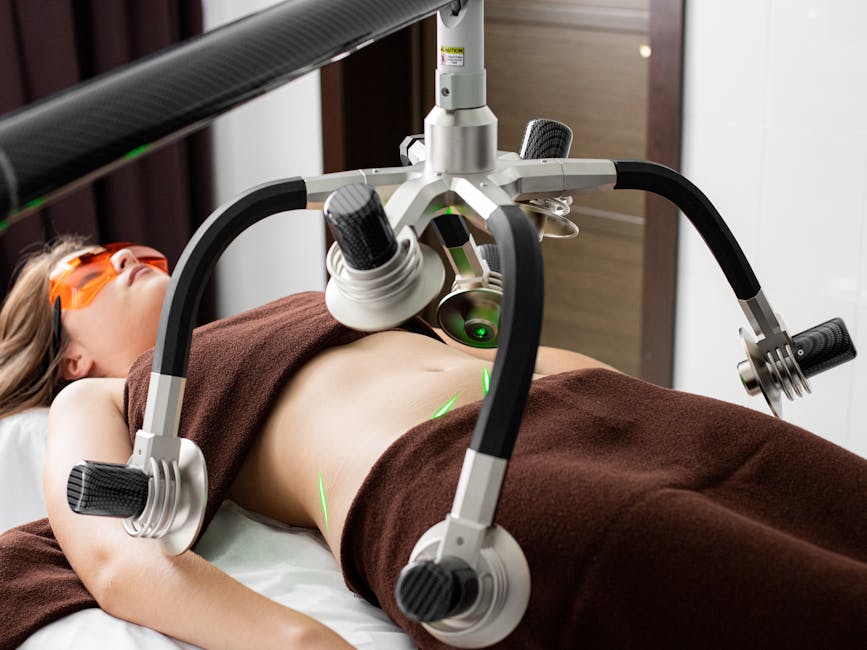
Postpartum fat reduction is an incremental process. Most treatment plans incorporate 2 to 4 treatment cycles per target area to achieve noticeable contour definition. These sessions are typically spaced 4 to 6 weeks apart, allowing the body sufficient time to process and clear cellular debris between appointments.
Initial visible changes generally emerge around 6 weeks following treatment, with full results developing across 6 to 12 weeks per cycle. Setting realistic expectations is essential; non-invasive contouring refines specific fat pockets rather than serving as a major weight-reduction procedure. Pairing consistent hydration, balanced nutrition, and appropriate physical activity supports the body's natural metabolic processes as treated adipocytes are eliminated.
Postpartum body contouring is well-suited for several common areas where stubborn adipose tissue lingers after delivery:
Certain regions should be avoided during postpartum recovery. Active breast tissue must not be treated, particularly while nursing or experiencing hormonal breast changes. Treatment should also avoid tender surgical scars, active abdominal hernias, and areas displaying pronounced muscle separation without prior clinical clearance.
CoolSculpting is engineered specifically for subcutaneous fat reduction and does not tighten loose skin or repair diastasis recti. If skin laxity or muscle separation represents the main source of abdominal fullness, cryolipolysis alone will not produce a flat contour. Combining fat reduction with skin-tightening technologies or seeking core rehabilitation provides a more comprehensive outcome.
Most practitioners recommend waiting at least 8 to 10 weeks for superficial C-section incision healing, followed by a full 3 to 6 month window before undergoing abdominal cryolipolysis. This waiting period allows internal tissue layers to heal, reduces local sensitivity, and ensures medical clearance from your OB-GYN.
The fat cells eliminated through cryolipolysis are permanently destroyed and cleared by the body. However, remaining fat cells in the treated area can still expand with future weight gain. Maintaining a stable weight and balanced lifestyle helps sustain your results over time, while future pregnancies may alter tissue distribution again.
Restoring your abdominal contour after childbirth requires a thoughtful approach that honors your body's healing timeline. By waiting for hormones to rebalance, allowing surgical incisions to mature, and confirming whether your concerns stem from subcutaneous fat, muscle separation, or skin laxity, you can select the safest and most effective path forward.
Platinum Sculpt provides specialized body contouring consultations in Bowling Green and Lexington, KY, offering personalized assessments to evaluate tissue health and design targeted treatment plans. Schedule an appointment to book a free consultation and explore our professional CoolSculpting services.
.svg)

