

Or call us at for a free consultation!
Bowling Green: (270) 714-9964
Lexington: (859) 762-2664
Winchester: (859) 762-2664
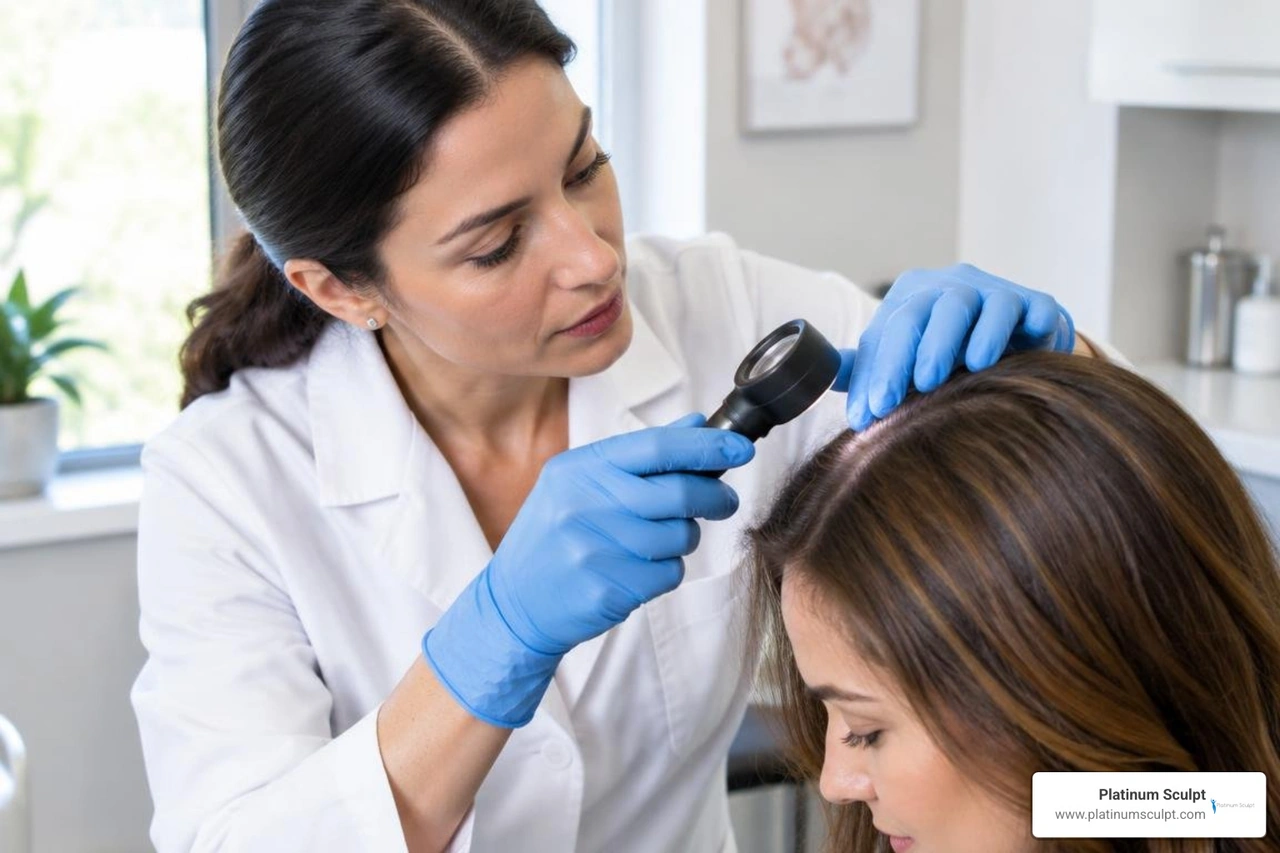
The right hair loss treatment depends on why your hair is thinning. A clinician can check your scalp, review recent health changes, and recommend tests when needed. Pattern hair loss may respond to treatments such as minoxidil or finasteride. Sudden shedding may improve after its trigger is addressed, while patchy alopecia areata may need a different approach. Results vary, and visible regrowth often takes several months.
Losing 50 to 100 hairs a day is usually normal. Hair grows in cycles, so a change in shedding does not always mean permanent loss. If thinning concerns you, or you notice sudden bald patches or scalp irritation, book a consultation to discuss the cause and your options.
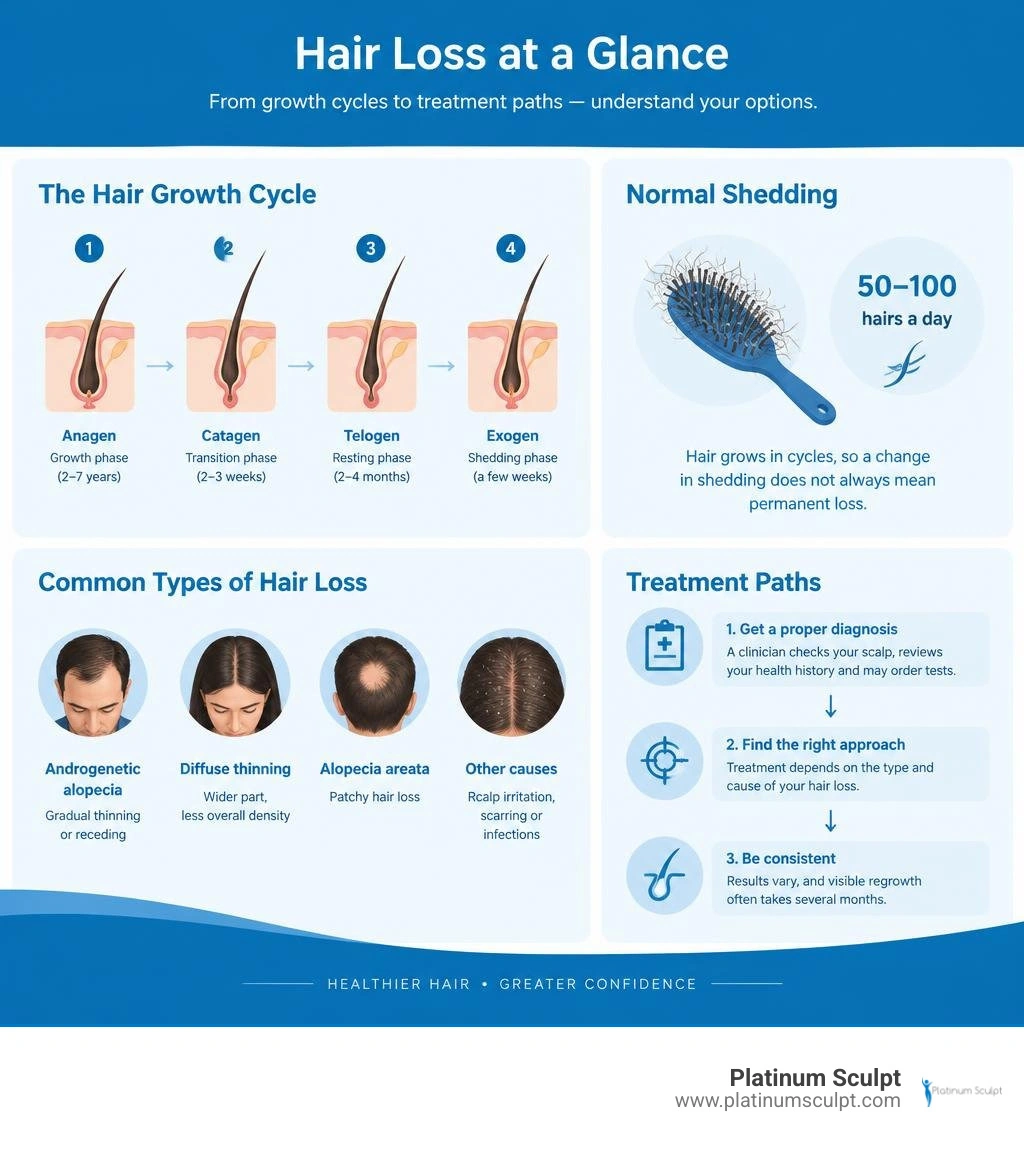
Hair loss, medically referred to as alopecia, presents in several distinct forms. Choosing the most suitable protocol begins with an accurate diagnosis from a qualified practitioner or dermatologist. According to the Mayo Clinic guide on hair loss diagnosis, clinicians evaluate the physical pattern of thinning, scalp health, and patient medical history to determine the underlying mechanism.
Androgenetic alopecia represents the most common form of hair loss, affecting over 80 million men and women in the United States. In men, it often presents as a receding hairline or thinning at the crown. In women, it typically manifests as a diffuse widening of the center part while maintaining the frontal hairline. This hereditary condition is driven by genetic sensitivity to dihydrotestosterone (DHT), a potent androgen that binds to hair follicles, causing them to miniaturize over time.
Telogen effluvium is a form of diffuse, nonscarring shedding. It occurs when a physiological stressor, such as illness, rapid weight loss, surgery, high fever, or hormonal fluctuations, pushes a large percentage of active anagen (growth) hairs prematurely into the telogen (resting) phase. This shedding usually peaks two to three months after the triggering event. In many seasonal cases, individuals wonder about summer shedding vs hair thinning, where temporary environmental changes increase daily hair fall without causing follicular damage.
Alopecia areata is an autoimmune condition where the body's immune system mistakenly targets anagen hair follicles, leading to smooth, round, patchy areas of hair loss. In more severe presentations, it can progress to complete scalp loss (alopecia totalis) or total body hair loss (alopecia universalis).
Traction alopecia arises from chronic physical tension on the hair shaft, commonly caused by tight hairstyles like braids, extensions, or slicked ponytails. If caught early, relieving the tension allows the follicles to recover fully.
| Alopecia Type | Primary Underlying Cause | Clinical Presentation | Common Diagnostic Methods |
|---|---|---|---|
| Androgenetic Alopecia | Genetic sensitivity to DHT | Receding hairline, crown thinning, or widening center part | Physical exam, dermatoscopy, family history |
| Telogen Effluvium | Physiological or physical stress, illness, hormonal shifts | Rapid, diffuse shedding across the entire scalp | Hair pull test, medical history review, blood panels |
| Alopecia Areata | Autoimmune attack on hair bulb | Discrete, smooth, round or oval patches | Dermatoscopy (exclamation mark hairs), scalp biopsy |
| Traction Alopecia | Prolonged mechanical tension | Thinning along the frontal and temporal margins | Visual assessment, styling history |
To evaluate thinning hair accurately, medical providers utilize structured diagnostic steps:
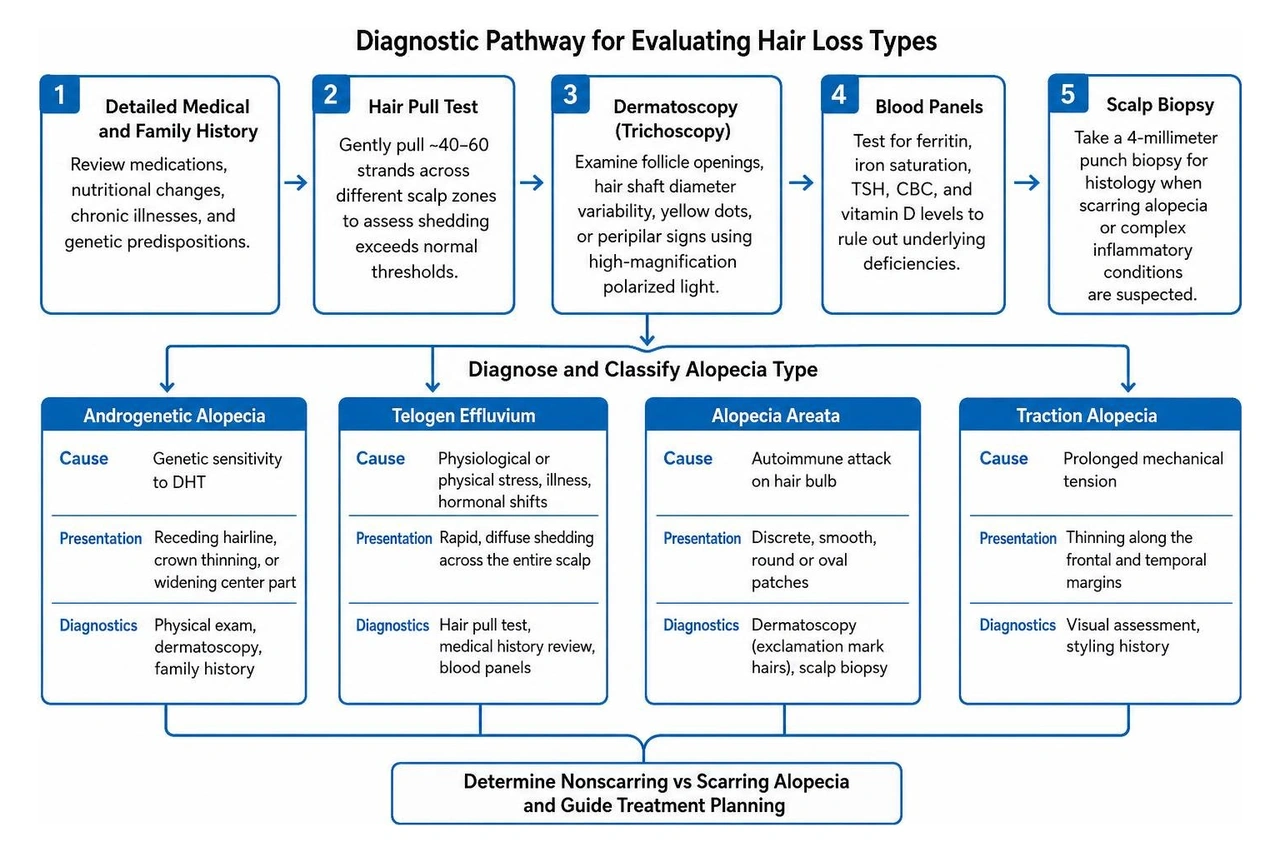
Differentiating between nonscarring and scarring alopecia is essential. Nonscarring alopecias preserve the follicular architecture, meaning the hair follicle remains alive and capable of regrowing hair when stimulated. Scarring (cicatricial) alopecias involve permanent destruction of the stem cell reservoir in the follicle bulge, replacing the tissue with fibrous scar tissue.
For autoimmune hair loss, clinicians classify progression using standardized tools. The traditional Severity of Alopecia Tool (SALT) measures scalp surface area loss on a scale from 0 (no loss) to 100 (complete scalp loss). More recently, clinicians also apply the Alopecia Areata Severity Scale, which incorporates eyebrow, eyelash, and body hair involvement alongside psychological quality-of-life metrics. Understanding these patterns is especially helpful when assessing hair thinning in women, where hormonal and metabolic factors often intersect.
Pharmaceutical therapies remain a foundational approach for managing progressive pattern loss and autoimmune shedding.

Topical minoxidil is an over-the-counter solution or foam applied directly to the scalp. It acts as a potassium channel opener and vasodilator, encouraging microcirculation around miniaturized follicles and extending the anagen growth phase. It generally requires at least six months of continuous daily use to prevent further loss and stimulate new growth. Patients should anticipate a temporary increase in shedding during the first two to six weeks of use; this occurs as dormant telogen hairs are shed to make way for new anagen growth.
Oral finasteride is a prescription 5-alpha reductase type II inhibitor approved for men with androgenetic alopecia. By blocking the enzymatic conversion of testosterone to DHT, finasteride significantly reduces serum and scalp DHT levels, slowing follicle miniaturization. Because of potential risks to fetal development, women who are pregnant or planning to become pregnant must avoid handling crushed tablets. Oral dutasteride and spironolactone represent alternative systemic options often prescribed off-label by clinicians based on individual patient profiles.
For patchy autoimmune loss, intralesional corticosteroid injections (such as triamcinolone acetonide) are injected into the dermal layer of bald patches every four to six weeks. These injections suppress local inflammation, often triggering visible hair regrowth within six to eight weeks.
For moderate to severe alopecia areata, the American Academy of Dermatology guidance on alopecia highlights oral Janus kinase (JAK) inhibitors. Medications such as baricitinib and ritlecitinib work by interrupting the intracellular signaling pathways of inflammatory cytokines, preventing T-cells from attacking hair follicles and allowing significant scalp, eyebrow, and eyelash regrowth.
Regenerative medicine focuses on reactivating dormant hair follicle stem cells (HFSCs) and improving the microvascular environment of the scalp (Kaewmungkun et al., 2025).
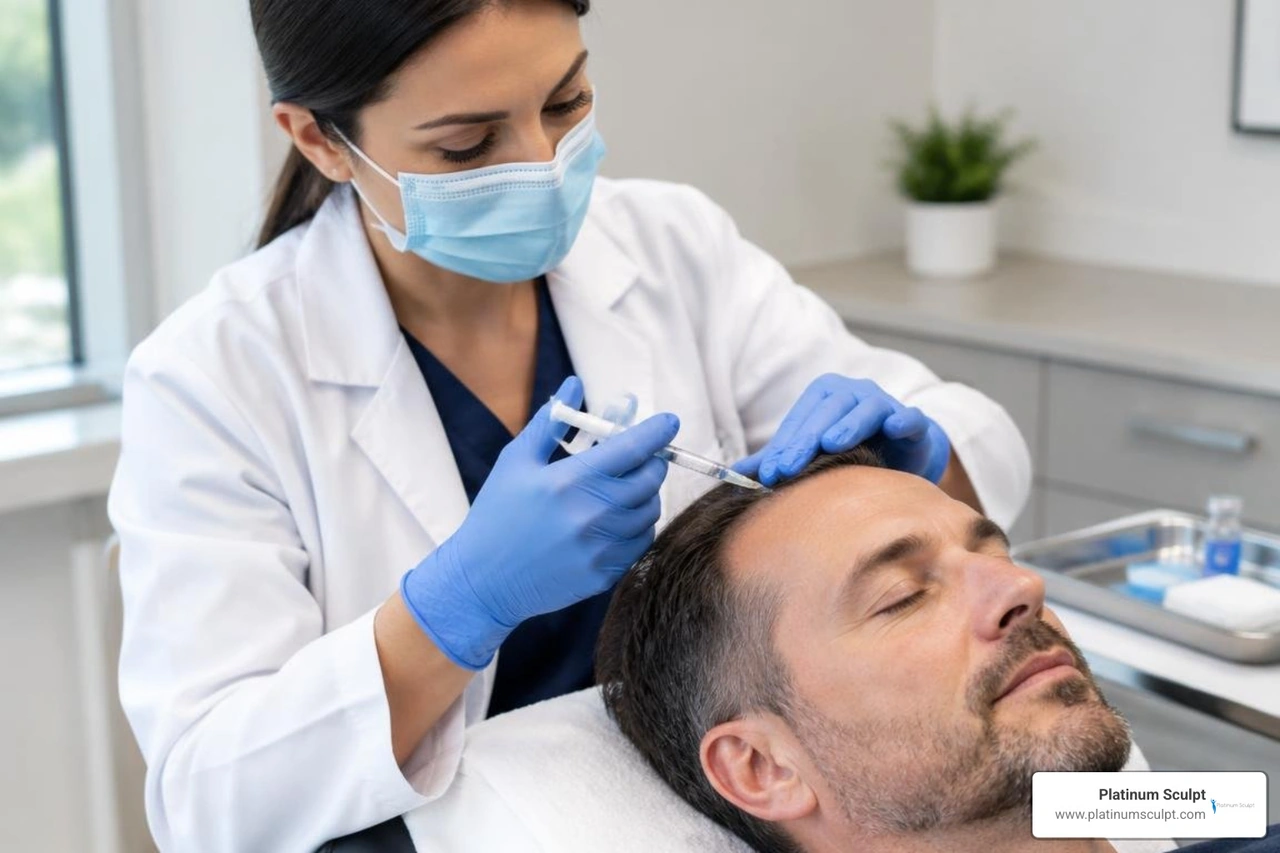
Clinical research evaluates cellular approaches such as Adipose-Derived Stromal Vascular Fraction (ADSVF) therapy. In clinical studies, ADSVF cellular injections increased anagen phase hairs by 93.4% and decreased telogen resting phase hairs by 35.6% after six months (Kaewmungkun et al., 2025). These cell populations secrete beneficial growth factors, including VEGF, HGF, and PDGF, which encourage angiogenesis and nourish miniaturized follicular units (Kaewmungkun et al., 2025).
Hair follicle cell transplantation involves isolating specific cells from healthy donor follicles, such as dermal sheath cup cells or dermal papilla cells. In Phase II and Phase III clinical trials, low-dose dermal sheath cup cell injections (75,000 cells per spot) demonstrated measurable improvements in hair density and shaft diameter at six to nine months, showing up to a 77.8% improvement in female participants and 47.1% in male participants (Kaewmungkun et al., 2025).
Extracellular vesicles (EVs) and exosome therapies are also being actively researched. These nanoscale biological messengers transport signaling proteins, mRNA, and microRNA directly to recipient follicular cells. Laboratory animal models evaluating adipose stem cell extracellular vesicles delivered via microneedle patches observed a 99% hair generation rate compared to 77% for topical 3% minoxidil controls (Kaewmungkun et al., 2025). Many of these advanced cellular signals act on the Wnt/beta-catenin pathway, a primary molecular switch that drives hair follicle stem cells from a resting state into active regeneration (Kaewmungkun et al., 2025).
When hair follicles have permanently scarred or miniaturized beyond recovery, surgical restoration provides a permanent physical relocation of healthy follicles.
Surgical intervention depends entirely on finite donor density; patients with extensive global thinning may not have enough donor follicles for full coverage. Historical procedures such as scalp reduction surgery (excising bald crown skin and stretching hair-bearing areas together) are less common today due to advanced grafting techniques. For individuals seeking non-invasive visual density, scalp micropigmentation utilizes cosmetic pigments placed in the upper dermis to replicate the appearance of short, buzzed hair follicles or reduce scalp contrast.
Modern medical spas and aesthetic practices offer comfortable, non-surgical therapies that support scalp wellness and encourage natural regrowth.
Low-Level Laser Therapy (LLLT) uses red light diodes (typically 650 nm wavelengths) via in-office hoods or home-use caps. This light energy stimulates cellular cytochrome c oxidase within follicular mitochondria, increasing adenosine triphosphate (ATP) production and cellular metabolism.
Platelet-Rich Plasma (PRP) therapy utilizes the patient's own concentrated growth factors. A small sample of blood is drawn and spun in a specialized centrifuge to isolate the platelet-rich layer. These concentrated platelets contain fundamental growth factors that, when injected into the scalp at precise 1 to 4 mm depths, encourage cellular repair and follicular vascularity. Patients exploring in-office solutions often evaluate comparing Keralase and PRP to choose between laser-assisted growth factor delivery and autologous platelet injections.
Scalp health is fundamental to successful hair restoration. Specialized treatments like the HydraFacial Keravive scalp treatment cleanse, exfoliate, and hydrate the scalp. Using vortex suction technology, it removes dead skin cells, sebum buildup, and product residue while infusing biomimetic growth factors and skin proteins directly into the hair follicles to create an optimal environment for growth.
| Treatment Modality | Mechanism of Action | Session Frequency | Target Candidacy |
|---|---|---|---|
| Low-Level Laser Therapy (LLLT) | Photobiomodulation increases ATP and cellular metabolism | 2 to 3 times weekly (home or clinic) | Early androgenetic alopecia, diffuse thinning |
| Platelet-Rich Plasma (PRP) | Autologous growth factors stimulate follicle microvascularity | Initial series of 3 to 4 monthly sessions, then maintenance | Active thinning, early pattern loss, telogen effluvium |
| Microneedling + Serums | Micro-punctures stimulate collagen and enhance product absorption | Every 4 to 6 weeks | Androgenetic alopecia, general scalp revitalization |
| HydraFacial Keravive | Deep pore cleansing, exfoliation, and growth factor peptide infusion | Series of 3 monthly treatments | Dry, congested scalps, general hair thinning support |
Daily lifestyle habits, metabolic balance, and nutrition directly impact the hair growth cycle. The body considers hair a non-essential tissue, meaning systemic nutrient deficiencies often show up as increased shedding or brittle hair shafts.
Most medical and non-surgical hair restoration treatments require three to six months of consistent use before visible improvements appear. Because human scalp hair grows at an average rate of approximately one-half inch per month, newly stimulated follicles require multiple growth cycles to produce thicker, mature terminal hair shafts. Patients should anticipate stabilizing shedding first, followed by gradual visual density improvements over six to twelve months.
You should schedule a professional clinical evaluation if you experience sudden, rapid hair fall, noticeable bald spots, scalp pain, burning, redness, or scaling. These symptoms may indicate an underlying autoimmune response, scalp infection, or inflammatory scarring condition that requires prompt medical diagnosis and targeted intervention to prevent permanent follicular damage.
If an area of the scalp has been smooth and bald for many years, the hair follicles have likely undergone complete miniaturization or fibrotic scarring, meaning non-surgical therapies cannot restore them. Non-surgical and regenerative treatments work primarily on active, living follicles that are thinning or dormant. When follicles are completely absent, surgical hair transplantation or cosmetic micropigmentation are the primary options for restoring visible coverage.
Hair restoration is most successful when treatment is tailored to the specific cause of thinning. Platinum Sculpt is a luxury med spa located in Bowling Green, Lexington, and Winchester, KY, specializing in body contouring, injectables, skin tightening and laser resurfacing, facials, hair restoration, and medical weight loss and wellness.
Our clinical teams evaluate your scalp health, shedding patterns, and personal goals to design a multi-modal hair restoration protocol that fits your needs. Service availability varies by location: HydraFacial is offered at Bowling Green only; DiamondGlow is offered at Lexington only; TotalSkin Solution is exclusive to Lexington and Bowling Green. Our Winchester location does not offer HydraFacial, CoolSculpting, CoolTone, or facials, focusing instead on injectables, medical weight loss, laser resurfacing, hair restoration, IV infusions, GeniusRF, and PDGF under-eye treatments.
While treatments can help strengthen thinning hair and results vary by individual, early intervention offers the best opportunity to preserve follicle health. Explore our comprehensive hair loss treatment options to learn more. Book a free consultation today by calling 270-714-9964 for our Bowling Green clinic or 859-762-2664 for our Lexington and Winchester locations.
Kaewmungkun K, Kaisang S, Yokhaphachon N, Parnpai R. "Advanced medical treatments for hair loss.." Cell transplantation, 2025. PMCID PMC12553935.


