

Or call us at for a free consultation!
Bowling Green: (270) 714-9964
Lexington: (859) 762-2664
Winchester: (859) 762-2664

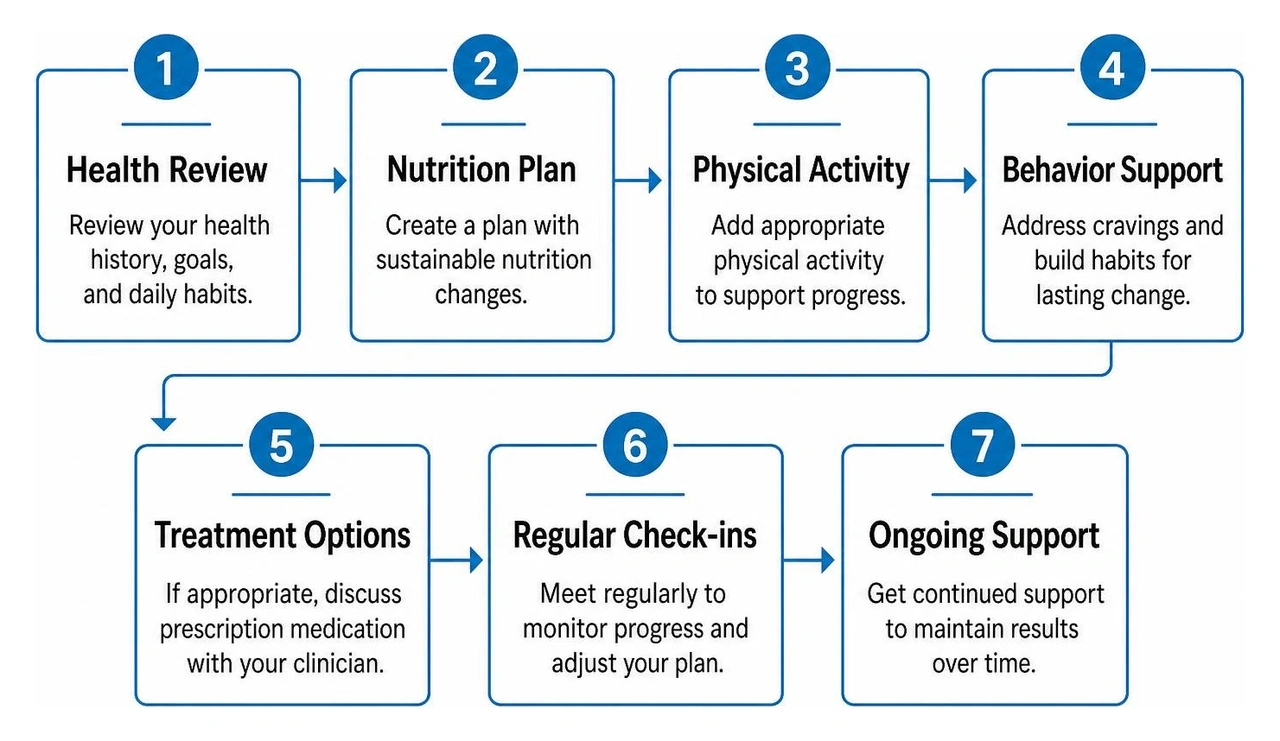
A medical weight management program starts with a review of your health, goals, and daily habits. It may combine nutrition changes, physical activity, support for cravings, and regular check-ins. If appropriate, a clinician may also discuss prescription medication. The right plan depends on your health history, and results vary.
Platinum Sculpt offers weight loss and wellness services in Bowling Green, Lexington, and Winchester, Kentucky. Book a consultation to learn which options may fit your goals.
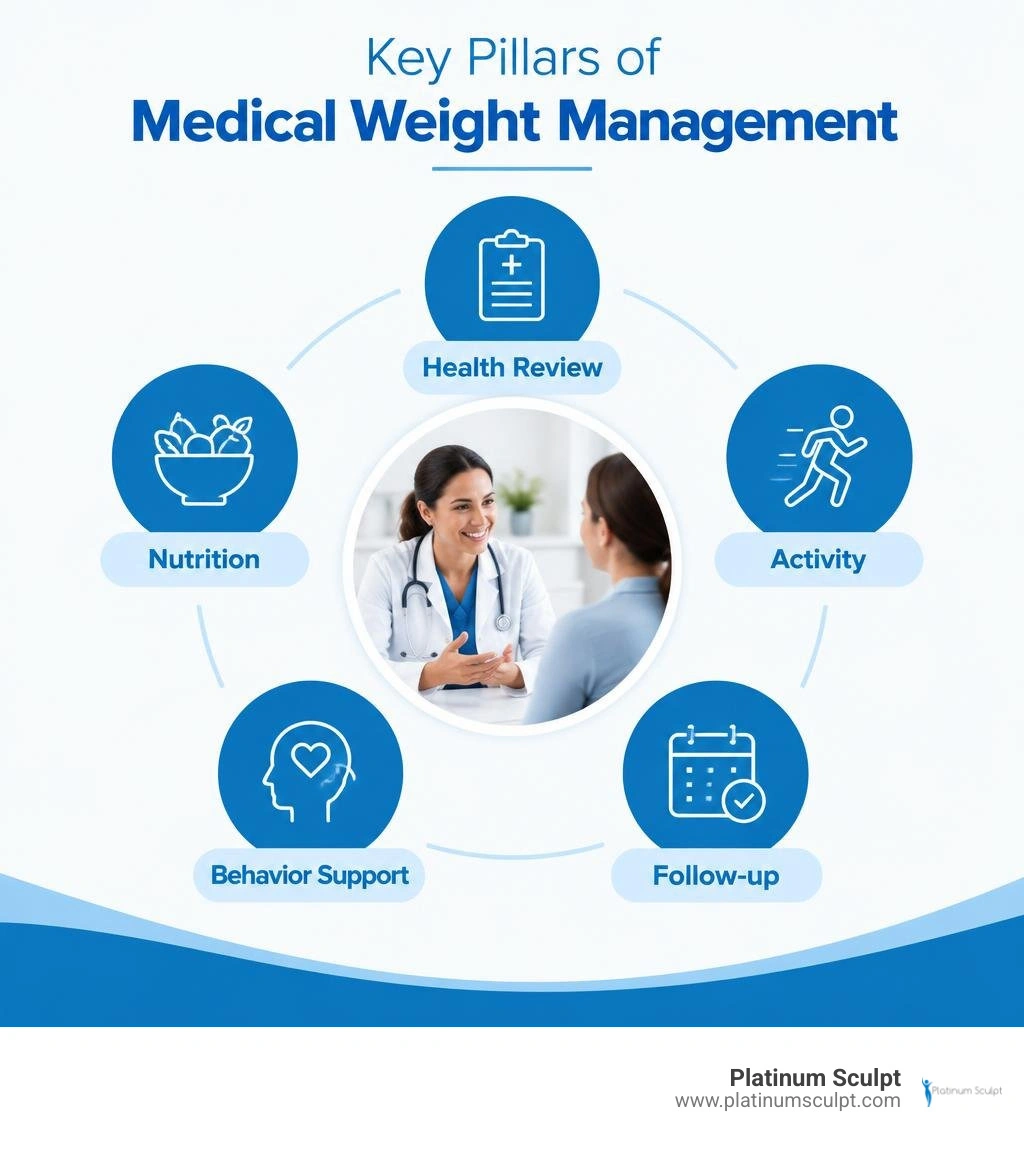
Weight management program vocab explained:
A clinical weight management program also draws on established medical guidance. The National Institute of Diabetes and Digestive and Kidney Diseases explains how structured programs can support gradual, sustainable changes in eating and activity patterns.

Achieving lasting wellness requires moving beyond standard calorie restriction. A structured clinical approach focuses on metabolic health, sustained habit shifts, and close medical supervision. Rather than applying a single formula to every individual, clinical care evaluates hormonal pathways, body composition, resting metabolic rate, and unique daily routines.
Commercial diets often prioritize rapid, short-term outcomes that can lead to muscle loss and nutritional deficiencies. In contrast, clinical weight management balances health parameters like blood glucose, lipid counts, and cardiovascular capacity while preserving lean tissue.
| Feature | Standard Commercial Diets | Clinical Weight Management |
|---|---|---|
| Supervision | Self-directed or peer-led | Licensed medical professionals |
| Personalization | Generalized caloric deficits | Metabolic, hormonal, and biometric assessments |
| Behavioral Support | Basic food tracking | Psychometric evaluation and craving management |
| Medical Therapies | None | Prescription medications or metabolic therapies when indicated |
| Focus of Success | Total scale weight only | Fat loss, visceral fat reduction, and cardiovascular health |
The psychological aspects of eating heavily influence long-term success. Clinical research shows that low craving control is the single psychometric trait that significantly predicts overconsumption (R² = 0.20, P = 0.04). When confronted with energy-dense foods, individuals with lower craving control overconsumed by an average of 33±5% (approximately 550±88 kcal). This acute overconsumption directly predicted overall percentage weight change over a 14-week observation period (β = 0.23, P = 0.005).
Addressing these tendencies requires structured behavioral strategies rather than sheer willpower:
Nutrition in a clinical setting emphasizes satiety, volume, and nutrient density. High-energy-density foods (often providing more than 2.5 kcal per gram) trigger overconsumption because they deliver large caloric loads before fullness cues register.
Restructuring meal plans toward lower energy density allows individuals to consume satisfying meal volumes while maintaining a caloric deficit. Emphasizing dietary fiber, lean proteins, and complex carbohydrates stabilizes blood glucose, moderates ghrelin (the hunger hormone), and extends fullness between meals.
A clinical team may also adjust macronutrient distribution as body composition changes. For example, preserving lean tissue during weight loss often requires a higher protein intake than standard commercial diets provide. Regular follow-up visits allow the clinician to refine these targets based on energy levels, appetite, and measured changes in body composition.

While changes in body shape are encouraging, the internal physiological shifts produce the greatest long-term health advantages. Setting realistic expectations around measurable health milestones ensures sustained motivation throughout the process.
Exercise combined with modest weight reduction delivers clear improvements in metabolic function. Achieving a modest weight loss of at least 3% body weight alongside regular aerobic exercise produces significantly greater improvements in insulin sensitivity (2.2 mU·l⁻¹·min⁻¹) compared to exercise without weight reduction (0.8 mU·l⁻¹·min⁻¹).
Furthermore, reaching this 3% threshold generates favorable improvements in non-traditional cardiovascular markers:
Weight management directly affects the autonomic nervous system. In clinical studies involving adults with type 2 diabetes on energy-restricted diets, an average weight reduction of 11.1±1.0 kg (roughly 10% of body weight) over 16 weeks generated major autonomic benefits.
Heart rate variability (HRV), a direct measure of autonomic flexibility and cardiovascular resilience, improved significantly:
These metrics highlight how body weight reductions relieve strain on the heart and restore balanced autonomic regulation. Improvements in HRV also suggest better vagal tone, which supports the body's ability to shift between stress and recovery states. Over time, these changes may contribute to lower systemic inflammation and more stable blood pressure regulation.
For many individuals, lifestyle changes alone may encounter biological barriers, including hormonal counter-adaptations that increase appetite and lower resting energy expenditure. Advanced medical options can help navigate these metabolic hurdles safely.
Modern prescription therapies, such as GLP-1 receptor agonists, work by mimicking natural incretin hormones to delay gastric emptying, improve glycemic control, and signal satiety in the brain. When paired with clinical support, these medications help patients manage hunger while building healthy lifestyle habits.
To explore clinical options tailored to your needs, review the Platinum Sculpt weight-loss services available at our practices.
Long-term success relies on ongoing monitoring and regular adjustments:
Physician oversight also helps identify when a plateau is related to metabolic adaptation rather than a lapse in adherence. In those cases, the care team may adjust medication timing, revise activity recommendations, or reassess body composition to confirm that fat loss is continuing even when scale weight remains stable.
A safe, sustainable rate of weight loss is typically 0.5% to 1% of total body weight per week (about 1 to 2 pounds for most individuals). Gradual reductions help protect lean muscle mass, prevent gallstone formation, and support steady metabolic adaptation without triggering intense rebound hunger.
Low craving control is the strongest psychological predictor of overconsumption, particularly when energy-dense foods are present. Other influential factors include high dietary disinhibition (the tendency to overeat in response to emotional stress or social cues) and rigid, all-or-nothing dietary rules that lead to binge patterns after minor deviations.
Losing just 3% to 5% of initial body weight significantly improves insulin sensitivity, lowers triglycerides, and improves LDL particle profiles. Reductions closer to 10% can restore autonomic balance by increasing heart rate variability measures (such as SDNN and total power) while lowering resting heart rate and systemic blood pressure.
A consultation typically includes a review of health history, current medications, eating patterns, activity levels, and previous weight loss attempts. The clinician may recommend baseline blood work or body composition testing to guide the plan. From there, the team can discuss realistic goals and which services may be appropriate for your situation.
Platinum Sculpt is a luxury med spa located in Bowling Green, Lexington, and Winchester, KY, specializing in body contouring, injectables, skin tightening and laser resurfacing, facials, hair restoration, and medical weight loss and wellness.
Service availability varies by location: HydraFacial is offered at Bowling Green only; DiamondGlow is offered at Lexington only; TotalSkin Solution is exclusive to Lexington and Bowling Green. The Winchester location does not offer HydraFacial, CoolSculpting, CoolTone, or facials, but focuses on injectables, weight loss, laser resurfacing, hair restoration, IV infusions, GeniusRF, and PDGF under-eye treatment.
Except for CoolSculpting at our Bowling Green location (which is guaranteed in writing per practice policy), medical outcomes cannot be guaranteed; treatments can help improve health markers, but results vary based on individual physiology and adherence.
If you are ready to evaluate your metabolic health and explore comprehensive medical weight loss solutions, contact our team today to book your free consultation.
.svg)

